Physical Address
304 North Cardinal St.
Dorchester Center, MA 02124
Physical Address
304 North Cardinal St.
Dorchester Center, MA 02124

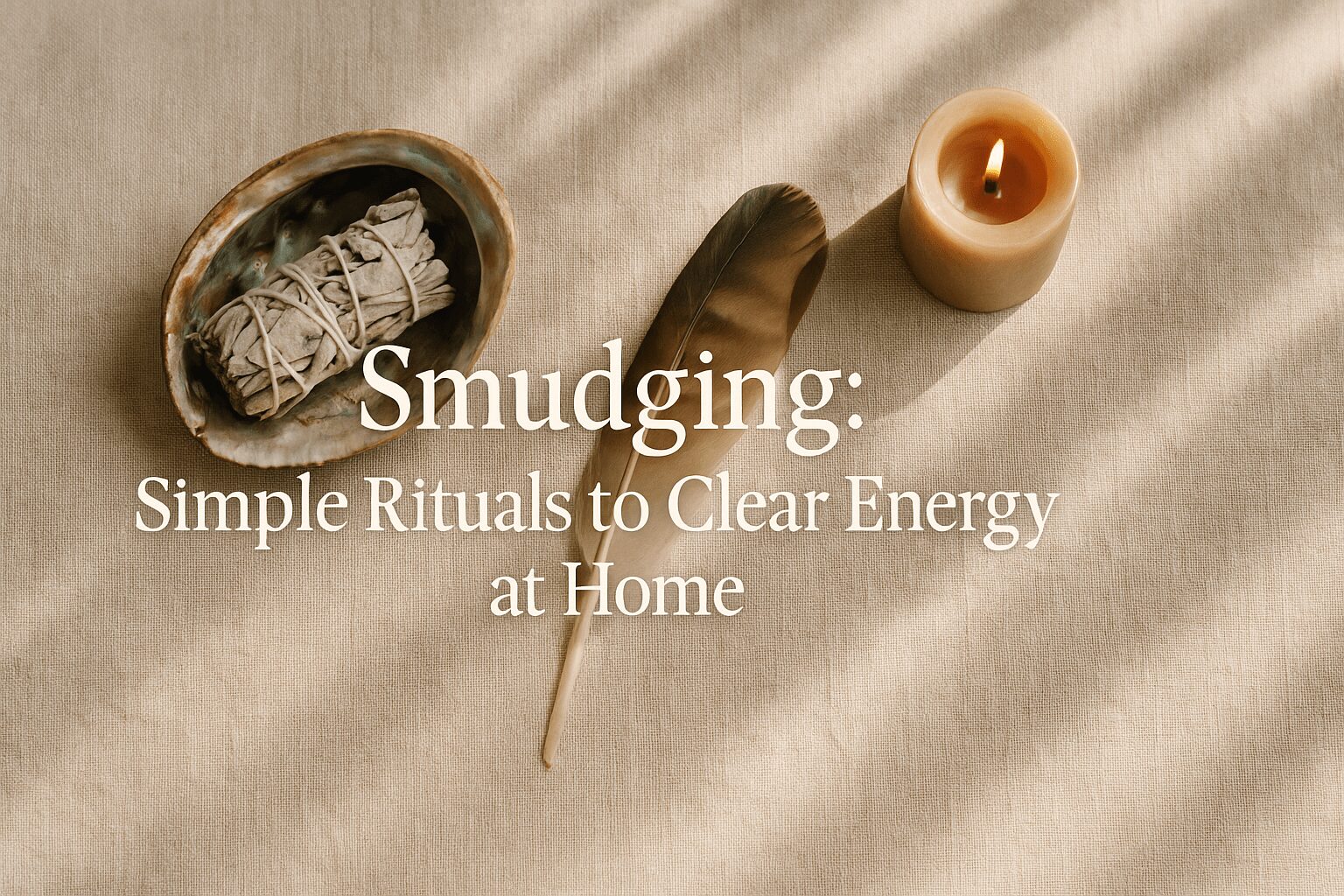
Smudging is a ceremonial practice often associated with various Indigenous cultures, particularly in North America, but it has also been adopted in various forms across different cultures worldwide. The practice involves burning sacred herbs to cleanse and purify a space, object, or individual.
You’ve probably seen someone wave a trail of herb smoke through a living room and wondered what’s going on.
That’s smudging – an old practice people use to refresh their spaces, release tension, and mark new beginnings.
At its heart, this is a moment of intention: you pause, breathe, and ask your environment to match the mood you want.
Although the roots are ancient, the appeal is modern. After a hard day, a short ritual can help you reset faster than doom-scrolling ever will.
The aroma from dried herbs (often sage, cedar, or sweetgrass) creates a gentle sensory cue that says, “we’re done with the chaos”.
Moreover, small acts like opening a window, slowing your steps, and repeating a simple intention give your mind something steady to hold.
You don’t need to adopt a full spiritual framework to benefit. Instead, think of it as mindful housekeeping for your headspace.
Additionally, many people notice that a room feels lighter and more focused once they’ve finished.
Because it’s simple and low-cost, it’s easy to try, evaluate, and keep only if it works for you.
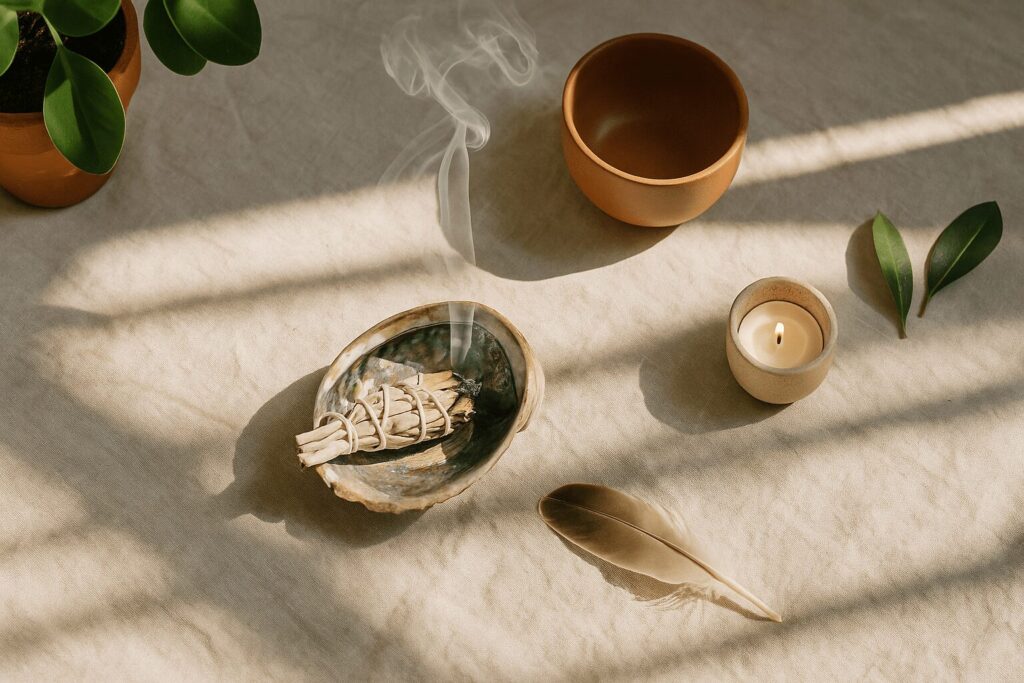
A smudging ritual is about slowing down and reconnecting with yourself.
Start by taking a moment to prepare – open a window, clear a bit of space, and pick the herbs that speak to you. The goal is to set a calm tone before you even strike a match.
Next, take a few steady breaths and decide what you’re releasing or inviting in.
Maybe it’s stress from the week, or maybe it’s the sense of calm you’ve been missing.
As the smoke begins to rise, let it move gently around you and through the room. Think of it as a physical reminder of your intention – a visible way to shift your focus from noise to stillness.
Respecting where this practice comes from adds depth and mindfulness to it.
Use ethically sourced materials and handle everything with care. A simple dish, feather fan, or bowl will do just fine.
You don’t need fancy words or chants. A quiet statement like, “I’m letting go of what doesn’t serve me”, is enough.
By the time you finish, your breathing slows, your thoughts settle, and the space feels noticeably lighter.
Take a final moment to feel gratitude – for the air, the quiet, and the chance to start fresh.
If you’re just starting out, smudging for beginners doesn’t need to be complicated or ceremonial.
Think of it as a simple ritual to hit reset on your surroundings.
Begin by choosing your herbs – white sage is the classic choice, but lavender, cedar, or rosemary all bring their own energy and scent.
Crack a window to invite in fresh air, then light the end of your bundle. Let it flame for a moment, blow it out gently, and watch as the smoke curls upward.
Move slowly through your space, letting the smoke drift into corners, under tables, and near doorways – all those forgotten spots where energy likes to linger.
Keep your intention short and clear; something like, “I’m clearing what’s heavy and inviting in calm”. Keep repeating your statement over and over while you move around.
Stay mindful of safety. Hold your bundle over a heatproof bowl or shell, and have sand or water nearby just in case.
If you don’t have anything to work with right now, check out this beginner-friendly kit: Amazon Starter Smudge Kit.
When you’re done, pause and notice how the space feels.
Maybe the air seems lighter, or maybe your shoulders drop an inch lower.
That’s the point – subtle shifts that make your home (and head) feel calmer.
Some people prefer palo santo or a light mist on days they don’t want smoke, but the idea is the same: create a moment of stillness that fits your life.
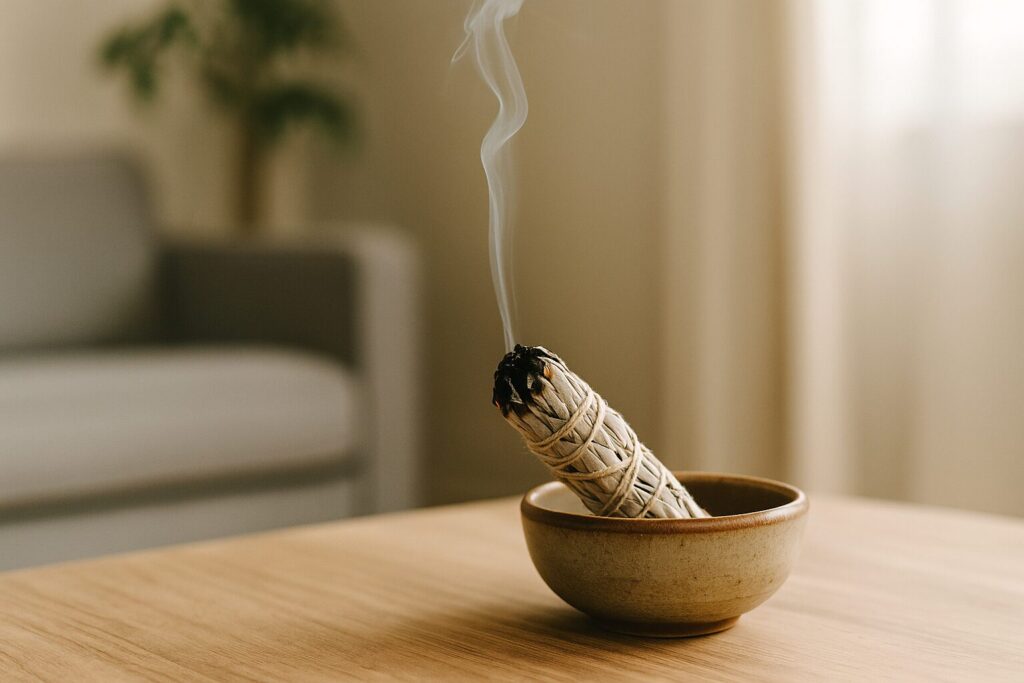
A sage smudging ritual is popular because it’s straightforward and effective.
Start by clearing surfaces so the ritual doesn’t compete with clutter.
Next, open windows for airflow. Then hold the bundle at a slight angle, light the tip, and let it glow before you gently blow it out.
Walk clockwise around the room.
Furthermore, sweep the smoke toward corners, closets, and mirrors.
Softly repeat your intention – something simple that feels true. Pause by the entry to symbolically reset how energy enters the space.
Because consistency helps, consider a short routine every Sunday night or after a tough meeting.
When you’re finished, just put the smudging stick on your heat proof tool until it cools down and goes out.
Finally, close the window to the level that feels comfortable and take three deep breaths.
Many people add a tiny follow-up (like lighting a plain candle or turning on calm music) to anchor the new mood.
As a result, your brain links the ritual with relaxation, making the effect easier to access next time.
Keeping your space clear isn’t a one-time thing – smudging a room works best when it becomes part of your regular rhythm.
Start with the basics: tidy up, light your herbs, and let the smoke move naturally through the air. Once you’re done, open the windows for a few minutes and let everything breathe.
It helps to make this a habit. Do a light smudge after guests leave, when the seasons change, or anytime the room feels heavy for no reason.
You don’t need to turn it into a full ritual every time. Even standing in the center of the room for a minute, letting the smoke rise while you breathe deeply, can shift the energy.
If you can’t use smoke, no problem. Try an herbal mist, a sound bowl, or just walk the space slowly while repeating your intention.
The main thing is to be consistent and mindful. Over time, you might notice small changes: deeper sleep, clearer focus, or fewer moments of restlessness.
Keep your tools simple, a few bundles, a safe dish, and some fresh air are plenty.
Handle everything with respect, and remember that it’s the awareness behind the act that matters most.
The more you do it, the easier it becomes to keep your home (and your head) feeling open, grounded, and calm.