Physical Address
304 North Cardinal St.
Dorchester Center, MA 02124
Physical Address
304 North Cardinal St.
Dorchester Center, MA 02124

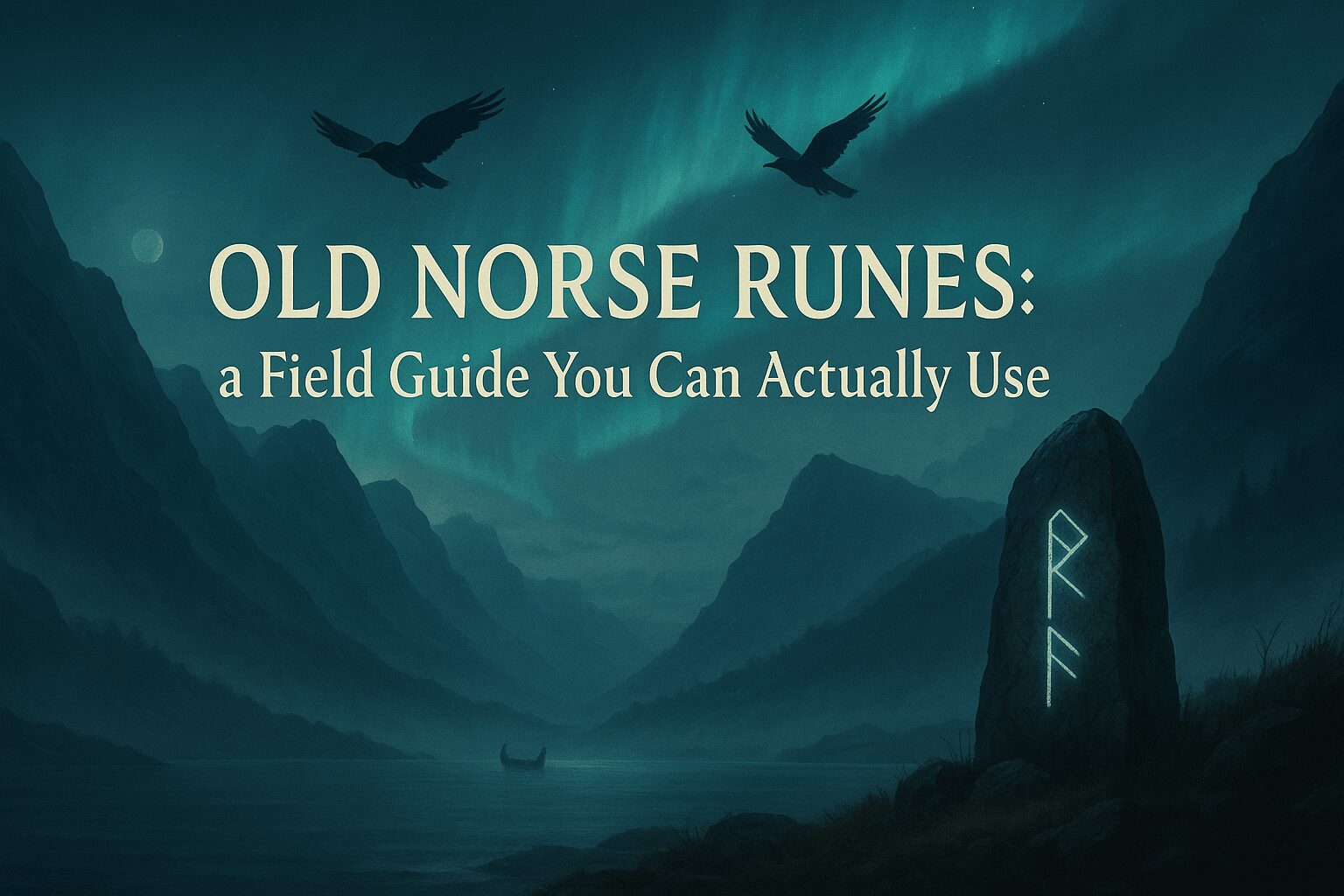
Old Norse runes are characters from the runic alphabets used by the Germanic peoples, particularly the Norse, from around the 2nd to the 8th centuries. These runes were not only a means of writing but also held significant cultural and mystical importance.
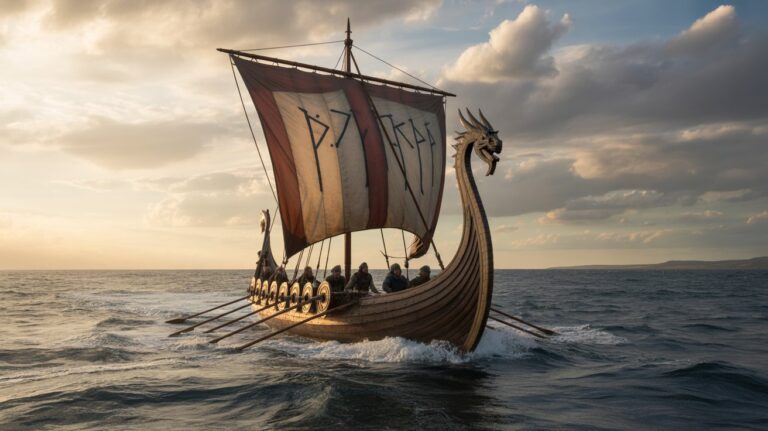
Most people picture Old Norse runes as the marks Vikings carved on tall stones across Sweden, Denmark, and Norway.
However, the phrase is slippery, since it can point to more than one system.
In this guide, I mean the Younger Futhark, the 16-rune script the Vikings actually used, along with the medieval variations that came after.
Therefore, when I say old Norse runes, I’m not talking about the earlier Elder Futhark or modern inventions. But the leaner alphabets that carried Viking names, deeds, and stories into history.
When we talk about old Norse runes, we’re talking about the alphabets used while Old Norse was the everyday language, roughly between the 8th and 14th centuries.
In the Viking Age, people carved with the Younger Futhark, a slimmed-down set of 16 runes.
Later, as the medieval period unfolded, scribes expanded and adjusted that system so it could handle church records, trade notes, and daily writing.
That distinction matters. Old Norse had more vowel sounds than the Younger Futhark could neatly represent, so one rune often had to cover several sounds at once.
Because of this, spelling in inscriptions from the time is flexible, sometimes even inconsistent, but always adapted to real speech.
The Younger Futhark cut the Elder system down from 24 runes to just 16, which meant each symbol had to cover more ground.
Unlike the Elder Futhark, which was split into three groups (ættir), the Younger set is usually shown as one continuous sequence.
Within that sequence, you’ll find two main styles: long-branch (often used in Denmark) and short-twig (common in Sweden and Norway).
Long-branch runes have tall, extended strokes, while short-twig runes look more compact, with quick, branch-like marks. Even though the shapes differ, the sounds they represent are basically the same.
Because the Younger Futhark has fewer runes, context becomes crucial. For instance, the same vowel rune might stand for o, u, or y, depending on where it appears.
That’s why, when reading old Viking runes on a stone, scholars rely on the surrounding letters, the formula of the inscription, and even local carving habits to pin down the right sound.
One of the most common questions is how to write Odin in Old Norse runes. In the Old Norse language, his name is spelled Óðinn, with a long “ó” and the letter “ð” (like the th in “this”).
The challenge is that the Younger Futhark alphabet didn’t mark every vowel difference and often used the same rune for both þ (thorn, like in thing) and ð (like in this).
So here’s how it works in practice. Start with Óðinn. The long “ó” maps to the rune for o/u, since Viking Age carvers used one symbol for several back vowels.
The “ð” gets written with the thorn rune, which doubled for both þ and ð. The “i” has its own rune, and the “nn” at the end can be shown with either one or two n-runes.
Because carvers preferred to save space, you’ll often see a single n instead of a double. That means both spellings – Óðin or Óðinn – are historically correct.

Reading Old Norse runes looks harder than it really is.
First, I figure out whether the inscription is written in long-branch or short-twig style, since that sets the visual tone. Next, I look for familiar anchor words like “raised”, “stone”, or common names – these repeat often and help lock in the context.
Then, I read the line twice. The first pass is just for identifying the shapes. The second pass is for matching them to their most likely sounds in Old Norse.
Along the way, I check for word dividers – usually dots – but I don’t rely on them completely, since carvers weren’t always consistent. Grammar helps confirm where one word ends and the next begins.
This mix of style, formula, and grammar keeps me grounded, even when the spacing is odd or a rune shape looks worn down.
When two signs seem ambiguous, the larger context usually makes the right choice clear.
The sharp, angular look of Old Norse runes come from the tools and materials. Carvers worked on wood, bone, and stone using knives or chisels, so straight lines were safer and cleaner than curves.
Angles and slants resisted splintering, especially when cutting across the grain, which is why the alphabet looks the way it does.
Shallow cuts also made sense because they stayed visible in dim light, whether in a workshop or a long winter hall. In other words, the shapes are practical solutions to real-world problems.
When you practice with pencil or stylus, keep your strokes at the same angle, just as a carver would. This consistency makes the runes easier to read and gives them that authentic period look.
It also teaches your hand to “think” like a carver, which improves both accuracy and feel.
If you wander through Scandinavia or browse a museum archive, you’ll find Viking runes carved into memorial stones, bridge markers, and even amulets.
Most follow familiar formulas like “X raised this stone for Y”, or short lines bragging about travels. Yet the details bring them alive.
Sometimes a carver slipped in his own name, or added a prayer showing the influence of Christianity. As a result, each stone becomes more than just a monument – it’s a direct voice from a specific person, place, and century.
At the same time, wooden runestaves and merchant notes from the medieval period show the runes at work in daily life.
They record debts, deliveries, and even little jokes.
Therefore, Old Norse runes were not only tools for memory or ritual – they were part of the everyday world, as practical as they were symbolic.
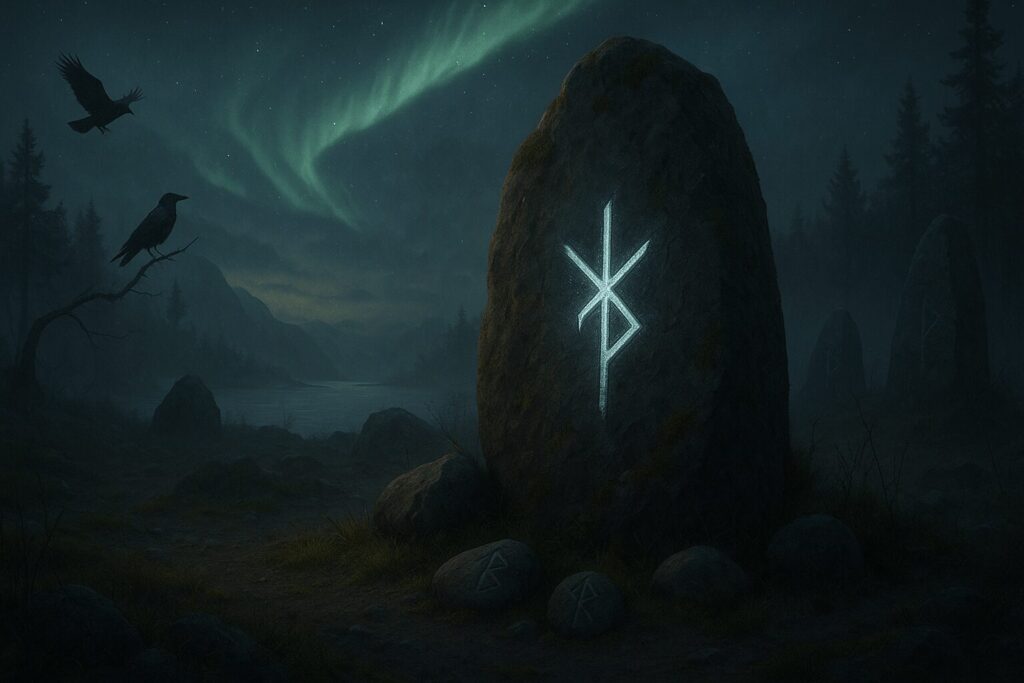
Sooner or later, you’ll come across Old Norse bind runes. These are combinations where two or more runes share a single stem.
Carvers used them for different reasons: to save space on a stone, to decorate a name with style, or to compress meaning into a tighter, more powerful mark.
If you want to make a bind rune yourself, think in terms of legibility rather than mystery. Start with a single main stem, then attach the branches so each rune is still recognizable.
Keep the left-to-right order intact. Finally, check your work by “unpacking” it in your head – if you can still read the original sequence clearly, the bind is successful.
Bind runes work best when anchored to something solid, like a name. For example, you can merge the last two runes of steinn (“stone”) onto one stem and still read the word easily.
However, once you try to bind whole sentences together, the design stops being writing and becomes a puzzle.
Start with a five-day sprint to get comfortable with Old Norse runes.
Day one: practice shapes. Draw each Younger Futhark rune five times, keeping the angles sharp and consistent.
Day two: map the sounds. Write the closest English sound under each rune. It won’t be exact, but it will anchor the connection in your memory.
Day three: practice reading. Copy a short inscription with a published transliteration. Go slowly and notice how the runes connect.
Day four: make it personal. Write your own name in both long-branch and short-twig styles to see how the forms shift.
Day five: finish with a project. Carve or draw one word on wood, card, or paper. Snap a photo to track your progress.
Repetition is what locks the runes into memory. By the end of five days, the shapes stop feeling like symbols from a museum case and start feeling like a script you can actually use.
Because repetition locks the forms, this compact sprint produces a feel for the script.
If you’d like a starter kit that includes a durable set and a pocket booklet, here’s one I recommend: Runic Starter Set with Field Guide.
One common mistake is trying to use Old Norse runes as a one-to-one swap with modern English letters. The Younger Futhark doesn’t line up that way.
Instead, think in sounds. Match the rune to the closest sound and accept that more than one spelling can be valid.
Another pitfall is mixing runes from different eras. If you’re working with Old Scandinavian runes, stay within the Viking Age or medieval forms.
Pulling in Elder Futhark symbols from centuries earlier just muddies the water. Keeping to one set makes your work clear and credible.
It’s also easy to overstate the “magical” side. Yes, charms and ritual uses exist, but many inscriptions are practical note- memorials, ownership marks, trade records.
So if someone claims every rune hides a fixed prophecy, treat it as a modern interpretation, not historical fact.
Reflective or symbolic use can still be meaningful. Just make sure you’re honest about what’s historical and what’s personal practice.
Old Norse runes aren’t the same as the Elder Futhark. The Elder set is earlier and has 24 signs, while the Viking Age script, the Younger Futhark, works with just 16.
There’s also no such thing as uppercase and lowercase in runic writing – that convention comes from Latin script. Every rune was carved the same way, whether it appeared at the start or middle of a word.
As for bind runes, they can look like secret codes, but they weren’t usually meant that way. Most were practical ligatures to save space or stylish monograms used for names and decoration, not hidden ciphers.
By now you’ve seen what Old Norse runes are, how the Younger Futhark works, and how medieval runes expanded on it.
You’ve also walked through how to write Óðinn in runes, why spelling varies, and how to design bind runes that stay readable.
On top of that, you’ve got a simple practice plan and a clear way to present your notes.
At this stage, you have enough structure to read, write, and explain the basics without guesswork.
If there’s one takeaway, it’s this: treat Old Norse runes as a living writing system shaped by history, not as a rigid code.
Always keep three things separate when you work with Old Norse runes: the script style, the sound it represents, and the context it appears in.
If you clearly name which style you’re using (long-branch or short-twig), state which sound the rune stands for, and explain how the surrounding text or culture shapes its meaning, your work will look accurate.
More importantly, anyone reading your explanation will be able to follow it without confusion.