Physical Address
304 North Cardinal St.
Dorchester Center, MA 02124
Physical Address
304 North Cardinal St.
Dorchester Center, MA 02124

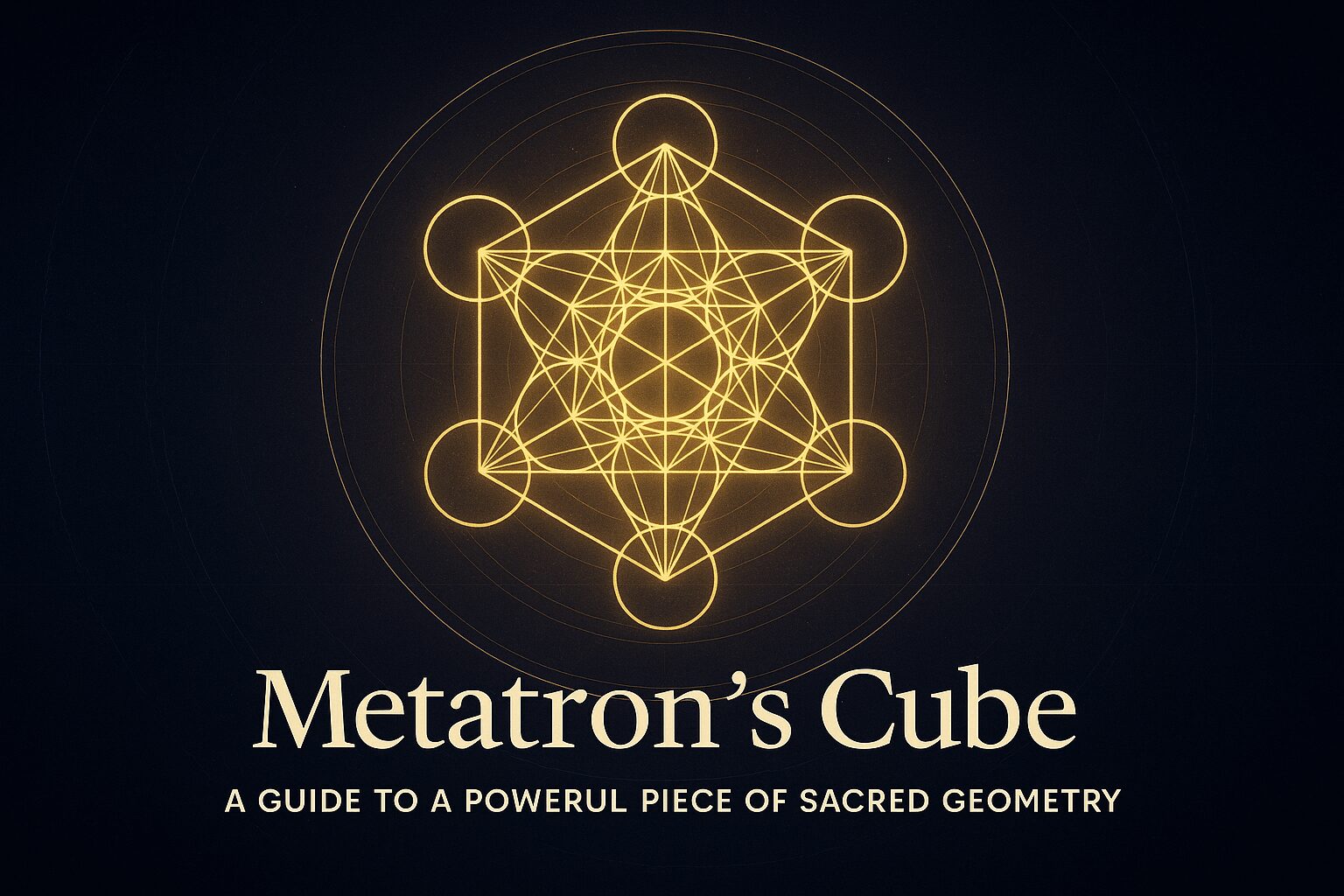
Metatron’s Cube is a complex geometric figure derived from the Flower of Life, named after the archangel Metatron in mystical traditions. It is a powerful symbol in sacred geometry, representing the structure of the universe and the interconnectedness of all things.
Metatron’s cube looks like a web of lines and circles, yet it carries a surprising amount of depth. At a glance it is a circle with thirteen evenly spaced points connected by straight lines.
However, once you follow those connections, you start seeing triangles, hexagons, and the outlines of familiar solids.
Because of that layered structure, people often ask about Metatron’s cube meaning. In plain terms, it’s a diagram that organizes harmony.
It arranges equal distances so that balance emerges everywhere you look.
Therefore, the eye relaxes while curiosity wakes up.
The name links the figure to the archangel Metatron in mystical traditions. Even so, the drawing itself is geometric rather than doctrinal.
You can build it with a compass and straightedge from a simple seed of overlapping circles.
Consequently, artists, teachers, and meditators all use the same template for different reasons. Some highlight the clean symmetry.
Others enjoy how the lines suggest motion, as if the shapes could rotate like gears.
Moreover, the design scales up and down without losing clarity, which makes it practical for jewelry, tattoos, wall art, and classroom diagrams.
Because the diagram feels both technical and poetic, the phrase “metatron symbol” shows up in many contexts.
People treat the image as a reminder of order, focus, and protection. However, you don’t need to accept any specific belief to appreciate its logic.
If you trace the lines slowly, you’ll notice how each part supports the whole. As a result, Metatron’s cube becomes a simple daily exercise in attention.
It teaches that complex forms can arise from small, repeatable steps, and it does so with a style that stays inviting rather than intimidating.
Open Metatron’s cube and you’ll find a compact gallery of geometry. The thirteen circles act like anchor points.
Draw straight lines between specific centers and the five Platonic solids appear in outline: the tetrahedron, cube, octahedron, dodecahedron, and icosahedron.
Consequently, many people call this figure a master key, because it holds the blueprints of these solids in one tidy map.
That is why metatron cube sacred geometry fans talk about it with such enthusiasm. It feels like a pocket universe where symmetry keeps revealing more symmetry.
However, the magic is mechanical, not mysterious. Equal circles create predictable intersections. Therefore, triangles, hexagons, and star patterns pop out naturally.
Moreover, those shapes share ratios you can measure. For example, the cube outline sits in quiet balance with the octahedron, while the tetrahedron slips in at clean diagonals.
Because everything is evenly spaced, the eye reads stability even when the lines crisscross like a busy lattice.
As a result, the drawing becomes a patient teacher, showing how order arises when spacing is fair and repetition is thoughtful.
The same map also invites a leap into three dimensions. If you imagine the lines as edges in space, a 3D Metatron cube springs to life as a mental model.
Additionally, you can project each Platonic solid outward, rotate it, and notice how faces align with the underlying grid.
Designers use this trick to test structure, while meditators use it to visualize balance. Meanwhile, beginners can simply color regions to learn the internal logic.
Because the figure rewards every level of attention, it stays fresh long after the first glance.

If you want to understand Metatron’s cube, drawing it is the best path. Start with one circle. Then place the compass point on the edge and draw another of the same size.
Continue stepping around to form a sixfold rosette, add a central circle, and mark the remaining points.
Consequently, you’ll have thirteen centers ready for straight-line connections. Keep your pencil light at first, because small errors multiply.
However, don’t chase perfection so hard that you lose the joy. The gentle wobble of a hand-drawn line adds warmth.
Once the structure appears, try simple practices. Trace one path while breathing in and another while breathing out.
Because the repetitions are smooth, your attention settles without strain. Therefore, Metatron’s cube meaning becomes experiential rather than theoretical.
You feel how balance can calm the mind. Moreover, the layout works as a planning grid. Place icons, letters, or images at the intersections to test composition.
As a result, posters, logos, and quilts gain an underlying rhythm that viewers sense even if they can’t name it.
Bring harmony and sacred geometry into your space with this Metatron’s Cube wall art.
The design moves gracefully from clean lines into soft shading and layered detail, creating a piece that feels both meditative and alive.
Perfect for anyone who loves mindful design, spirituality, or simply beautiful geometry, this artwork adds depth and balance to any room.
You can also explore digital layering and transparency if you’d like to pair it with modern graphics displays, making it versatile beyond just the wall.
Check out this Metatron’s Cube wall art and make it the centerpiece of your decor.
Meanwhile, teachers can adapt the same activities for lessons on symmetry, fractions, and pattern recognition in a way that feels playful rather than stiff.
People often ask about “metatron’s cube and flower of life”, because the two are close relatives.
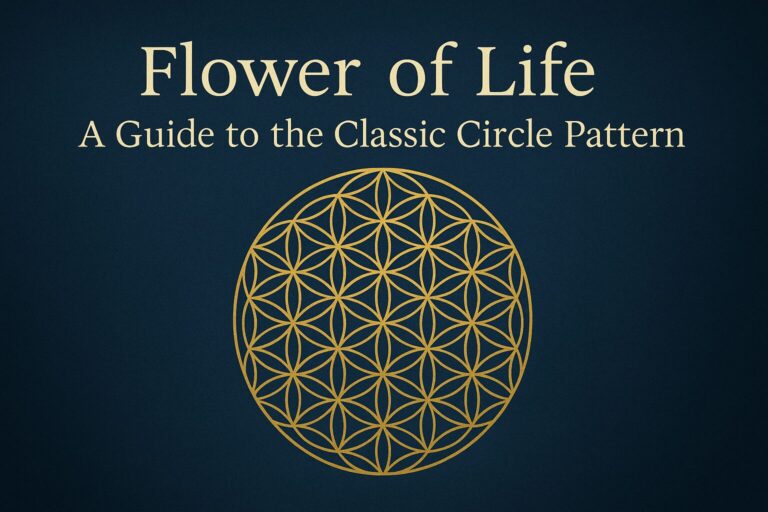
The flower of life is a field of equal circles arranged so that petals bloom everywhere you look. From that field, you can pick thirteen circle centers in a tight cluster.
Connect those points with straight lines and Metatron’s cube appears. Therefore, the cube feels like a crystal that condensed inside a living garden.
The flower supplies the rhythm; the cube expresses the structure that rhythm makes possible.
Because both patterns share the same circle logic, they naturally support each other.
The flower’s arcs soften the cube’s straight lines, while the cube’s diagonals reveal hidden alignments inside the petals.
Moreover, each serves a different mood. If you want flowing curves and gentle repetition, the flower of life helps. If you want crisp edges and actionable frameworks, Metatron’s cube steps forward.
Consequently, artists often layer them, letting curves and lines trade the spotlight as the viewer’s eye moves.
The comparison also clarifies Metatron’s cube meaning without heavy jargon. You can show how order grows from fair spacing, and how that order can be read as either organic or architectural.
Additionally, the pair demonstrates how one system can host many readings. Some people see cosmic maps. Others see simple practice sheets for focus and patience.
Meanwhile, both designs scale cleanly, which is why you’ll find them on tiny pendants and massive murals.
Finally, the partnership reminds us that beauty and logic do not compete; instead, they collaborate.

The phrase “metatron symbol” bridges geometry and myth. In some traditions, Metatron is a scribe or guardian who stands close to the divine, so the figure carries themes of clarity and guidance.
However, the drawing remains a neutral device made of circles and lines.
Therefore, you can use it for contemplation without adopting a belief system.
Trace a triangle, pause, then follow a hexagon. Consequently, your breath and attention fall into a steady rhythm that feels refreshing.
Because symbols can travel far from their origins, a little context matters. It helps to acknowledge that cultures attach different meanings to the same shapes.
Moreover, respectful use means avoiding grand claims that outrun evidence. You can discuss metatron cube sacred geometry as a practice of noticing harmony rather than as a magic shortcut.
Additionally, you can point to real, observable benefits: calmer focus, better spatial awareness, and a friendlier relationship with math.
Meanwhile, skeptics can enjoy the design as elegant engineering without any metaphysical layer.
In daily life, Metatron’s cube works as a gentle prompt. Place a print by your desk to cue a short breathing break. Use the grid under a sketch to balance a layout.
Color a copy before a tough conversation to ease your nerves.
As a result, the metatron symbol becomes a practical ally rather than a distant icon. Furthermore, its clarity makes it easy to teach.
Share the steps with a friend, and you’ll both discover new details hiding in plain sight. Finally, the more you return to the map, the more it returns you to calm attention.
Turning the figure into a 3D Metatron cube is easier than it sounds.
Imagine each straight line as an edge in space. Then picture the Platonic solids aligning with those edges, rotating slowly as if suspended in clear water.
Because the underlying distances are consistent, those rotations feel smooth rather than chaotic.
Consequently, students use the figure to learn about faces, edges, and vertices without getting lost in formulas.
Moreover, artists translate the same idea into sculptures, lamps, and laser-cut ornaments that cast mesmerizing shadows.
You can model the outlines in beginner-friendly software by snapping points to a hexagonal grid.
Additionally, 3D printing turns those models into tactile objects that invite play.
Hold a wireframe cube inside the larger lattice and notice how it nests with the octahedron. Therefore, the drawing becomes a hands-on lab.
If you teach, you can guide learners to assemble cardboard struts at the correct angles. Meanwhile, meditators can close their eyes and rotate a mental solid along the same axes, using breath as the motor.
As you keep exploring, keep the question of Metatron’s cube meaning close, but let it stay flexible. Sometimes it will feel like a clean tool for structure.
Other times it will feel like a quiet doorway into focus. Additionally, comparing metatron’s cube and flower of life from time to time keeps both patterns fresh.
Switch between curves and edges and notice how each mood supports the other. Finally, remember this simple truth: Metatron’s cube rewards patience.
Because the design reveals itself layer by layer, your understanding grows each time you trace a line, color a face, or share the pattern with someone new.