Physical Address
304 North Cardinal St.
Dorchester Center, MA 02124
Physical Address
304 North Cardinal St.
Dorchester Center, MA 02124


Hag stones, also known as “witch stones,” “hag stones,” or “glossy stones,” are naturally occurring stones that have a hole or holes through them. These stones have been associated with various folklore, magical practices, and cultural beliefs throughout history.
If you’ve ever found a smooth beach pebble with a natural hole through it, you’ve already discovered a Hag stone.
These stones turn up along rocky coasts, riverbeds, and gravel bars, and people prize them because the pierced shape looks mystical and feels satisfying to hold.
In this guide, we’ll explore what Hag stones are, the different Hag stone meanings across cultures and traditions, and simple ways to use a Hag stone at home, without too much superstition superstition.
Water, sand, and smaller pebbles slowly grind through the surface of a stone, creating what we call a Hag stone.
In other words, the stone you find on the beach is both a piece of geology and a natural charm you can wear on a cord.
The name changes depending on where you are. In coastal Britain, “Hag stone” is common. In other regions, you’ll hear “holy stone”, “witch stone”, “adder stone”, or even “Hagstones” written as one word.
No matter the name, the meaning stays the same: a naturally pierced stone carried or kept as a protective charm.
Hag stones form naturally at the shore, where moving water traps a pebble inside a small pit. As the pebble spins, it slowly grinds a circle into the stone.
Over months or even years, that circle breaks through, creating the hole. In softer rocks like limestone or chalk, weak acids in the water speed up the process.
As a result, Hag stones are most common in places with strong currents and stones soft enough to erode.
Because the hole forms naturally, the edges are smooth but slightly uneven. In contrast, machine-drilled fakes look too perfect, often showing straight tool marks.
If you’re not sure which one you’ve got, hold the stone up to the light and rotate it – natural edges scatter light irregularly, while drilled edges reflect in a neat, uniform ring.
Hag stone folklore stretches from the coasts of Britain to the Mediterranean. In English and Cornish tradition, a Hag stone hung above a stable or doorway was believed to protect travelers and animals.
In parts of Italy and Greece, fishermen tied similar stones to their boats for luck, safe seas, and better catches.
Meanwhile, some Nordic stories connect holed stones to second sight – the idea that you could “see through” illusions or hidden tricks.
Across these traditions, the theme stays practical. People used Hag stones as small, portable charms tied to everyday life – a boat, a bed, a doorway, or even a child’s cradle.
In other words, families wove Hag stones into household magic rather than temple rituals, which is why they still feel so grounded and relatable today.
Search for Hag stone meaning and you’ll find the same themes repeated across cultures: protection at thresholds, safe travel, restful sleep, and sharper vision or discernment.
The natural hole in the stone often symbolizes “a way through”. Since the rock has already survived years of water and sand, many also read it as a sign of strength and resilience.
These meanings are easy to carry into daily life. For instance, hang a small Hag stone on your backpack as a good-luck charm for safe travel.
Or place one above a window or doorway as a reminder to keep your home calm and protected.
When choosing a Hag stone, start with size and durability. Pick a stone that feels solid in your grip, and make sure the hole sits far enough from the rim so it won’t crack under tension.
Thicker edges also handle cords better than thin ones. If you plan to wear it, a thumb-sized Hag stone works best.
For doorways, windows, or rear-view mirrors, go for a larger piece so it stands out at a glance.
Color doesn’t change the meaning of a Hag stone, but it does shape the look.
For example, basalt feels bold and dark, limestone appears calm and pale, and flint shows smoky natural patterns.
In short, choose the stone that fits the mood of the space where you’ll keep it.
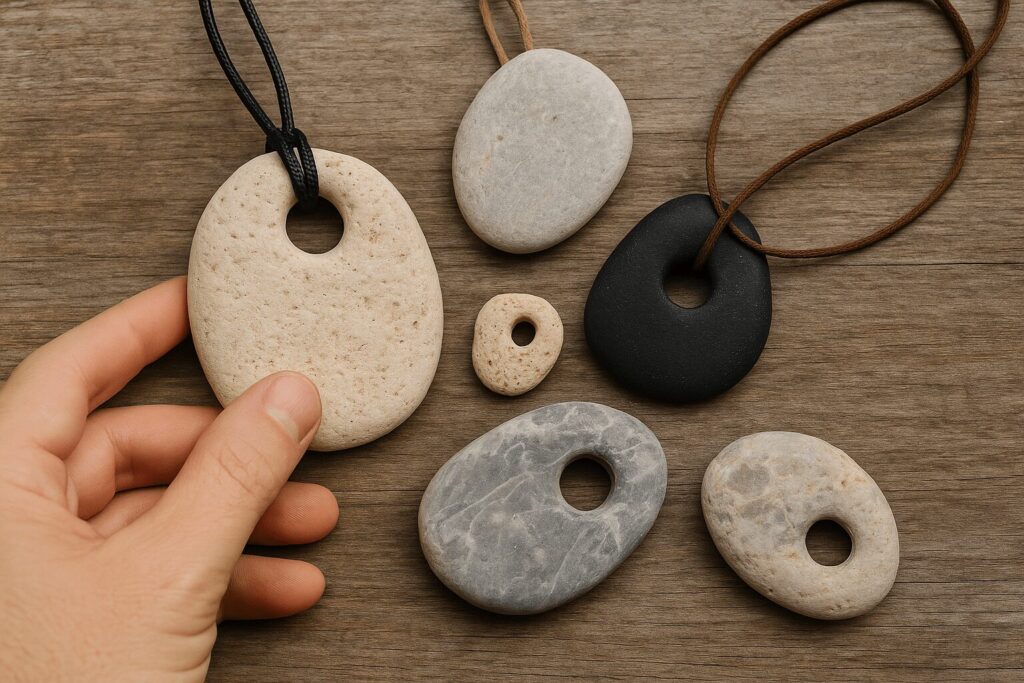
The best places to find Hag stones are tide lines after a storm, gravel bars along fast rivers, or the base of cliffs made of softer rock.
However, always check local rules first – many beaches and parks ban stone collecting. If you see a sign that says “no removal”, respect it.
In addition, never pull stones from historic walls or protected sites.
If you can’t collect one yourself, buy a Hag stone from a reputable seller.
Choose shops that clearly state the stones are naturally holed and legally sourced, and ask them to share notes on the origin.
On the other hand, if a listing says “drilled”, skip it, machine-made holes aren’t the real thing.
Display single Hagstones on a clean driftwood stand – pre-drilled pegs hold the stone without hiding the hole: Driftwood Stands.
For home protection: Tie a Hag stone to a red or black cord and hang it on the inside of your front door. Since thresholds play a big role in Hag stone folklore, this placement both honors tradition and adds a touch of rustic charm.
For sleep: If stress keeps you awake, hang a small Hag stone from the headboard with simple twine. The stone becomes a nightly cue – slow your breathing, set tomorrow’s plan, and let your mind settle.
Over time, the ritual feels calming and practical rather than superstitious.
For travel: Clip a tiny Hag stone to your luggage handle or backpack. The weight serves as a reminder to double-check keys, wallet, and phone before you leave.
Plus, the smooth hole makes a handy fidget tool while waiting in long lines.
For focus: Keep a pocket-sized Hag stone on your desk. Whenever your mind drifts, hold the edge, look through the hole, and count five slow breaths.
The stone turns into a physical “tunnel” that pulls your attention back to the task.
For gardening: Thread a few Hag stones onto garden twine and use them as gentle plant weights. They look rustic, they weather beautifully, and they carry the old folklore into your outdoor space.
Old folklore says you can look through a Hag stone to see what’s hidden. Today, this works beautifully as a mindfulness exercise.
First, hold the stone up to your dominant eye.
Next, line the hole with a single object – such as a candle flame, a tree in the distance, or even a photo on your wall.
Then, breathe in for four counts and out for six, keeping your gaze steady for about a minute. Because the hole narrows your focus, outside distractions fade away.
The result is a calmer state of mind – a modern, practical version of “clear seeing”.
Start caring for your Hag stone as soon as you bring it home. Rinse it with warm water to clear away sand or dirt, and skip harsh cleaners since they can damage softer stones.
If you’d like a gentle sheen, rub a drop of food-safe mineral oil into the surface and buff it dry.
In addition, check the cord weekly – if you spot any frays, retie the knot or replace the cord so your Hag stone charm doesn’t end up on the floor.
You can also add seasonal care for meaning. For example, rinse your Hag stone in the first rain of a new season, then set a small goal before hanging it back up.
Because repeating this ritual builds consistency, the stone becomes both a charm and a personal reminder of fresh starts.
A common myth says every holed pebble is automatically lucky – but the truth is less absolute. A Hag stone only becomes meaningful through how you use it.
Another myth claims these stones only “work” if they’re gifted, yet many traditions actually encourage finding your own.
What you should avoid are machine-drilled fakes sold as natural. If you prefer jewelry-grade smoothness, that’s fine – just be honest and call it carved or drilled, not a true Hag stone.
Most importantly, don’t expect medical results. Hag stones can support calm routines, focus, and symbolic protection, but they’re not a replacement for doctors or therapists.
Keep your practice grounded in common sense, and the stones will add meaning without slipping into superstition.
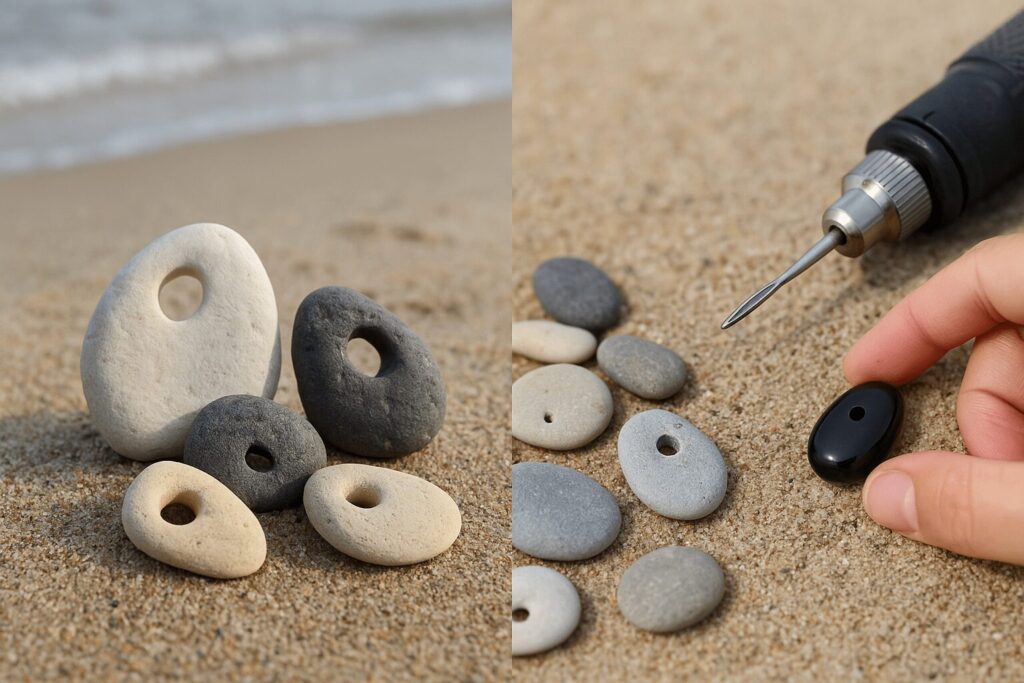
Start with one Hag stone that feels right in your hand. Next, choose a clear purpose – maybe safety on the road, focus at work, or calm sleep at night.
Then, clean the stone and thread a simple cord through the hole. Since purpose guides placement, keep the Hag stone where it matches your goal: hang it on a doorknob, clip it to your backpack, or place it by the bed.
After a week, check in with yourself. Did you reach for the stone when you needed the reminder? If yes, the ritual is working – keep it going. If not, adjust the placement or change how you use it.
In this way, you shape a Hag stone practice that genuinely helps rather than leaving it as a charm you forget.
A real Hag stone has a naturally worn hole with uneven thickness and soft, irregular edges. The hole is rarely centered, and the shape usually looks slightly imperfect.
In contrast, machine-drilled stones show perfect circles, sharp edges, and powdery drill grooves.
One trick is to hold the stone sideways – natural holes often taper, widening on one side and narrowing on the other.
When in doubt, think like a geologist.
Ask yourself: where would water flow, and where could grit swirl inside the rock? If the hole lines up with that natural movement, chances are nature made it, not a drill.
Shadow boxes are a great way to display Hag stones without covering their natural holes. For example, you can thread three Hag stones onto a piece of linen string and pin the ends inside the frame so the stones seem to float.
Alternatively, keep a rotating set in a shallow dish near your keys. Since you’ll see and touch them every day, they become part of your routine instead of gathering dust.
If you decide to share your Hag stone collection on social media, add the type of location – like “river”, “beach”, or “chalk cliff” – instead of exact coordinates.
This way you can educate others while avoiding over-collecting at one spot.
Hag stone folklore grew out of coastal life, where fishermen, farmers, and families used what the sea gave them. To honor that spirit today, collect responsibly.
Take only a few stones, leave habitats intact, and pack out any trash you bring.
If you visit a culturally sensitive or protected beach, admire the Hag stones where they lie and move on without removing them.
Hag stones are naturally holed pebbles shaped by water, grit, and time. Across folklore, the most common Hag stone meanings center on protection, guidance, resilience, and clear sight.
In old traditions, they were placed on doors, boats, beds, and cradles.
Today, you can adapt that wisdom – hang a stone on your front door as a threshold charm, carry a small one for safe travel, or keep one on your desk as a focus anchor.
Getting started with Hag Stones is simple. Pick a sturdy stone, tie it with a cord, and place it where its purpose matters most.
Because you’re pairing the symbol with an everyday habit, the practice stays grounded and useful.
In short, collect Hag stones thoughtfully, use them with intention, and let the tide-worn weight in your hand remind you to breathe, focus, and move forward – one step at a time.