Physical Address
304 North Cardinal St.
Dorchester Center, MA 02124
Physical Address
304 North Cardinal St.
Dorchester Center, MA 02124

Fire festivals are cultural celebrations that involve the use of fire as a central element, often symbolizing purification, renewal, or the changing of seasons. These festivals can be found in various cultures around the world and typically feature rituals, performances, and communal gatherings. Here’s an overview of some notable fire festivals:
I find these festivals fascinating because they mix story, season, and fire into one shared experience. My goal is simple: to give you a clear way to enjoy fire festivals with context, safety, and a sense of wonder.
I’ll walk you through the traditional cycle, highlight modern versions, and point you toward real events you can join.
At the same time, I’ll keep the tone light and the references clear so you always know exactly which practice I’m describing.
Put simply, fire festivals bring people together around bonfires, torches, embers, or floating braziers. In the past, fire served two main purposes: it marked seasonal transitions (like winter to spring, harvest to rest, or old year to new) and it symbolized purification, protection, and fresh beginnings.
In this guide, I focus on two paths. The first is traditional: seasonal observances tied to farming cycles and saints’ days.
The second is modern: community events that borrow the look and atmosphere of old rites but turn them into large public celebrations.
Because both traditions matter, I’ll show how they connect while still keeping the differences clear.
The Celtic fire festivals mark four turning points in the Gaelic year: Samhain (late autumn), Imbolc (mid-winter), Beltane (spring into summer), and Lughnasadh (the high-summer harvest).
Each festival uses fire in its own way, always tied to the rhythm of the season.
At Samhain, hearth fires were put out and rekindled to mark the year’s turning and create a clean reset. At Imbolc, lights burned in homes and churches to welcome the slow return of brightness during the leanest stretch of winter.
Beltane brought paired bonfires. Cattle and people passed between them to receive blessing and protection before moving to the summer pastures.
Finally, Lughnasadh celebrated the first harvest, with cooking fires and hilltop flames signaling abundance and community.
“Celtic” isn’t one fixed culture. It spans different regions (Ireland, Scotland, Wales, Brittany) and many centuries, so customs change from place to place and over time.
Even so, the same four seasonal festivals (Samhain, Imbolc, Beltane, Lughnasadh) show up again and again, so you’ll keep seeing that cycle in folklore, local histories, and museum labels.
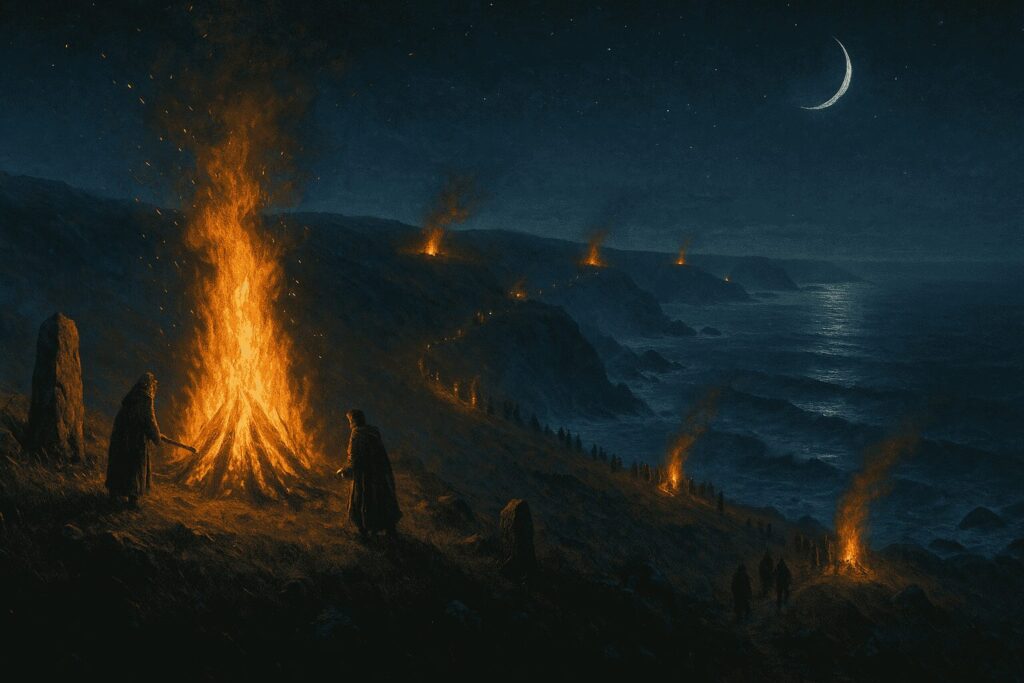
Today, plenty of communities run pagan fire festivals that mix old traditions with modern values.
You might see torchlight parades, drumming around a bonfire, or candle-lit circles where people share intentions. Each group does it differently, so expect variety.
Still, there are three signs that show an event is well-grounded.
First, the organizers explain which season or tradition they’re honoring.
Second, you can spot sober safety stewards keeping watch.
Third, there’s a clear beginning and ending so the night has structure.
Because fire is powerful and public, those details matter just as much as the symbolism itself.
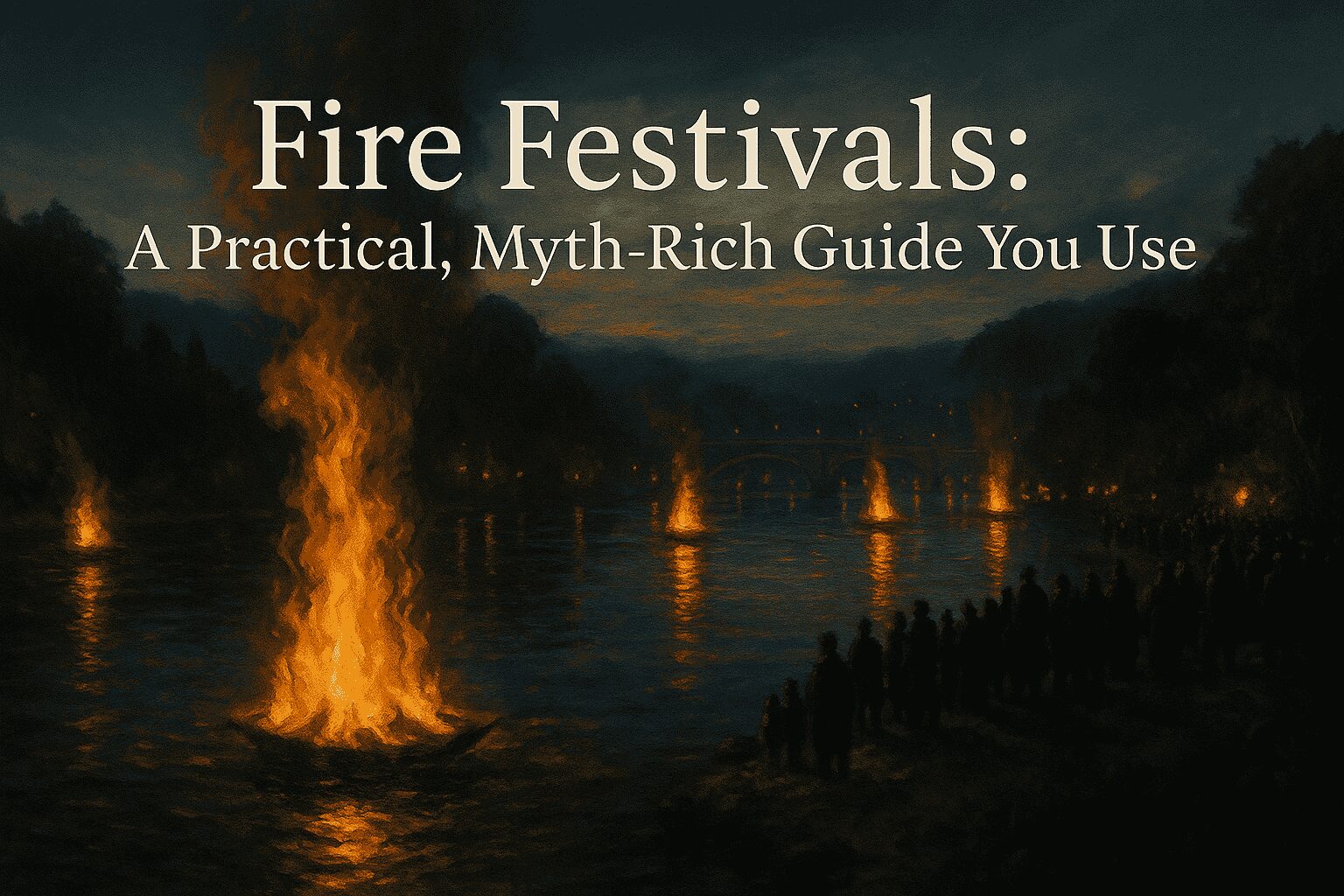
In many cities, a river fire festival means setting flames on or beside the water – floating braziers, fire sculptures on bridges, or torchlight arranged along the riverbank.
A well-known example is Providence’s WaterFire, though the event goes by a local name.
Over time, “river fire festival” has become a shorthand for that look: dozens of flames mirrored on dark water while crowds walk past and music plays in the background.
Because water reflects light and softens smoke, the effect feels more like theater than ritual.
Even so, the atmosphere creates a similar rhythm – people slow down, conversations drop to a hush, and strangers share the same quiet glow.
If you’re planning your first visit, I use a compact, windproof lighter and a small emergency LED to navigate after dark. Here’s the model I trust: Windproof Pocket Lighter – Field Edition.
Since big crowds and open flames don’t always mix well, a little preparation goes a long way. Arrive early to pick a good spot, ideally upwind of the smoke.
Dress for the night with layers, bring water, and wear closed shoes – embers and sandals are a bad match.
If you’re taking photos, be respectful. Always ask before photographing individuals, especially at pagan fire festivals where some people see the event as part of their personal practice.
Listen to the safety stewards and keep dogs away from crowded fire lines.
Out in the countryside, like at Celtic fire festivals, remember that fields and stone walls are real working landscapes, not props. Stick to paths, don’t climb fences, and leave gates as you found them.
City events are simpler, but the same courtesy applies – no drones over the crowd, no pushing for a photo, and never bring glass bottles near flames.
Across cultures, fire festivals often mark moments of transition. Three themes appear again and again, no matter the setting.
The first is renewal – turning old coals into the spark of a new season, year, or household.
The second is protection – using smoke and ash to bless animals, mark safe passage, or guard the home.
The third is community – sharing light in the dark to bring people closer together.
Because these themes repeat, you can make sense of almost any fire festival by asking what kind of threshold people are crossing.
Is it seasonal, civic, or personal?
Once you see that, the details fall into place.
If you’re chasing seasonal fire festivals tied to Celtic traditions, start small: check local council pages and heritage groups.
They’ll post dates and safety tips you won’t find in big event listings. For urban river fire nights, city arts calendars are your best bet.
After that, pull up a map and scout a bend in the river with clear reflections and fewer lampposts – your view (and your photos) will thank you.
Pack smart. A small tote with gloves, a scarf, and a power bank keeps you comfortable. Slip a trash bag in your pocket too, leaving a spot cleaner than you found it earns instant goodwill.
Pay attention to the wind. If smoke gets to you, stand downstream; that’s where embers and sound drift. And don’t forget your exit plan.
Crowds always leave slower than they arrive, so give yourself time to get out without stress.
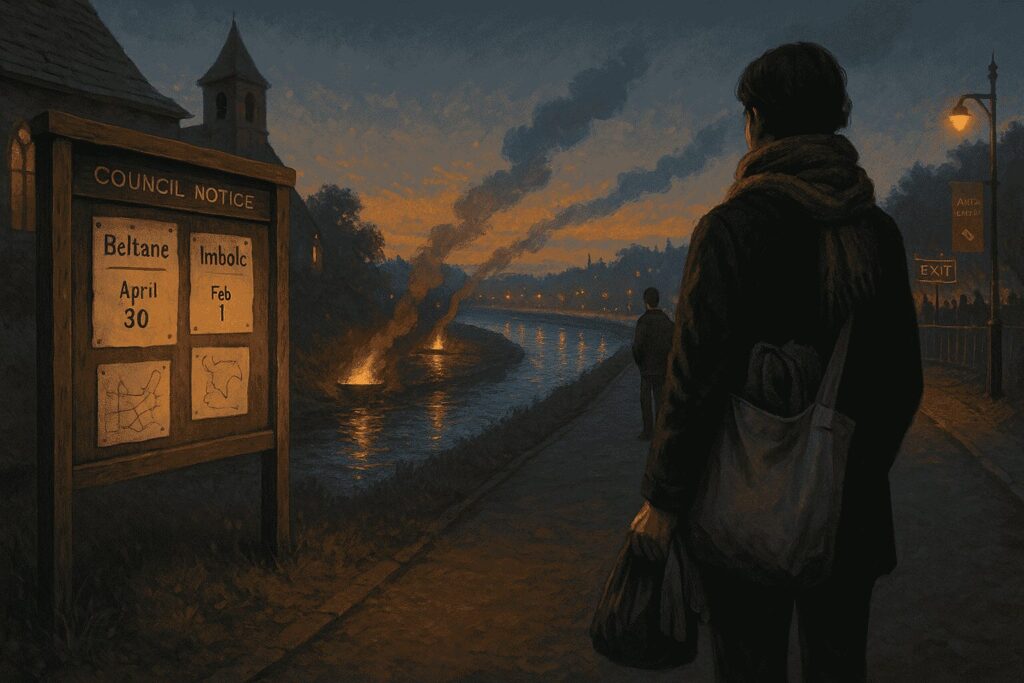
Not every night lit by fire counts as a Celtic festival, even if it looks that way. Read the program and use the name the organizers give – it shows respect and keeps you from lumping everything together.
Another pitfall is treating a sacred observance like a theme park show. For some, these nights are acts of faith or heritage, so a little respect goes a long way.
When you take photos at a fire festival, don’t make the fire too bright in your shot. If you do, the picture will look flat and washed out.
Instead, set your camera so the flames stay detailed, hold the camera steady so it doesn’t blur, and let some of the darkness around the fire show.
That way, the photo keeps the real mood of the night – the glow surrounded by shadows.
And if you’re heading to a river fire festival, don’t underestimate the chill.
The water pulls the warmth right out of the air, so pack an extra layer unless you want to shiver through the finale.
Seasonal markers like solstices and harvests originally anchored these traditions, but it was cities that turned them into big public spectacles.
Over the last century, folk revivals, tourism, and public-art programs have mixed old customs with modern flair.
That’s why today you might see torch parades on heritage days, giant sculptures set ablaze as monthly art events, or pagan fire festivals timed to solstices and cross-quarter days.
Because traditions shift over time, I pay attention to three things: the name organizers give the event, who’s actually running it, and who they invite to take part.
A city arts office hosting a river fire festival isn’t the same as a village committee keeping a Beltane bonfire alive.
Both are worth attending, but they belong to different lanes of tradition.
Are fire festivals religious or secular?
Both kinds exist. Some festivals are devotional or tied to heritage, while others are more like civic art events. The best way to know is to read the event page and match the tone the organizers set.
Is it safe to bring kids?
Usually, yes – if you listen to the stewards and keep a safe distance from open flames. Ear protection helps with drumming or fireworks, and it’s smart to teach kids a simple rule: look, don’t touch.
Do I need special clothes?
Not really. Still, natural fibers handle sparks better than synthetics, and closed shoes are safer on uneven ground. Since rivers and open fields cool quickly after sunset, pack an extra layer.
Can I light my own candle at a public event?
Sometimes, but it depends on the rules. Ask a steward first. If candles are allowed, keep them shielded from the wind and away from other people’s things.
By now you’ve seen how fire festivals mark turning points, how the old Celtic fire festivals shaped the yearly cycle, and how modern pagan and civic events carry those ideas forward.
You’ve also got a clear picture of what a river fire festival feels like and how to show up without spoiling the atmosphere.
So the next step is straightforward: pick a date, choose a city or a village, and step into the glow. Because you already know the rhythm and the etiquette, you don’t have to overthink it.
Just let the flames, the smoke, and that shared moment of quiet pull you in.