Physical Address
304 North Cardinal St.
Dorchester Center, MA 02124
Physical Address
304 North Cardinal St.
Dorchester Center, MA 02124

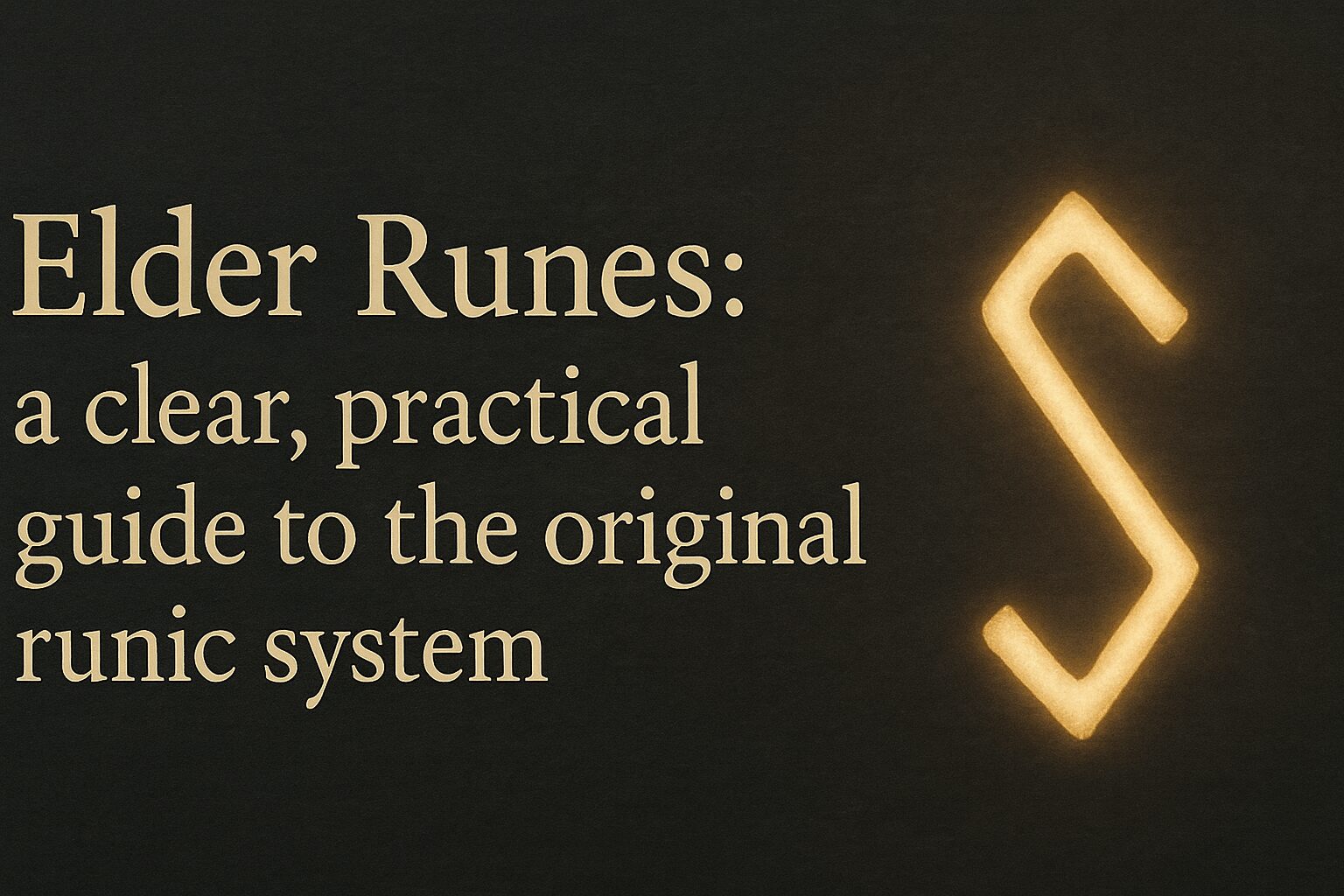
Elder Runes, specifically known as the Elder Futhark, represent the oldest form of the runic alphabets used by Germanic peoples during the Migration Period, approximately from the 2nd to the 8th centuries. This writing system consists of 24 runes and is significant not only for its historical context but also for its cultural and mystical implications.
People search for Elder Runes because they want to understand the oldest runic alphabet.
The steps are simple: learn when it was used, study the shapes, grasp the main ideas, and practice with them.
By the end of this guide, you’ll know the Elder Futhark well enough to start using it in your own routine.
When we talk about Elder runes, we mean the 24-character Elder Futhark – an early Germanic writing system used across Scandinavia and parts of Europe from the 2nd to the 8th century.
The name itself comes from the first six letters: F, U, Th, A, R, K.
Because the signs were designed for carving into wood, bone, and stone, their shapes are angular and sturdy.
As a result, the alphabet survived well, and since the set is complete and the inscriptions are plentiful, historians and language learners use it as the baseline for everything that came after.
From there, the Elder Futhark gave rise to the Younger Futhark of the Viking Age and also shaped the Anglo-Saxon runes of England.
Therefore, if you want to study the roots, you start with the Elder runes. Then, once the forms are familiar, you can move forward into later systems with confidence.
As you copy the sequence, say each rune’s name out loud. This way, shape, sound, and meaning connect in your memory.
When people ask about Elder Futhark rune meanings, they usually want a quick way to remember the signal each rune carries.
Here’s a straightforward overview you can practice and then test in your daily notes:
With daily practice, these meanings stop feeling abstract and start turning into habits you can apply – whether that’s noticing timing, setting boundaries, or celebrating small (but meaningful!) wins.
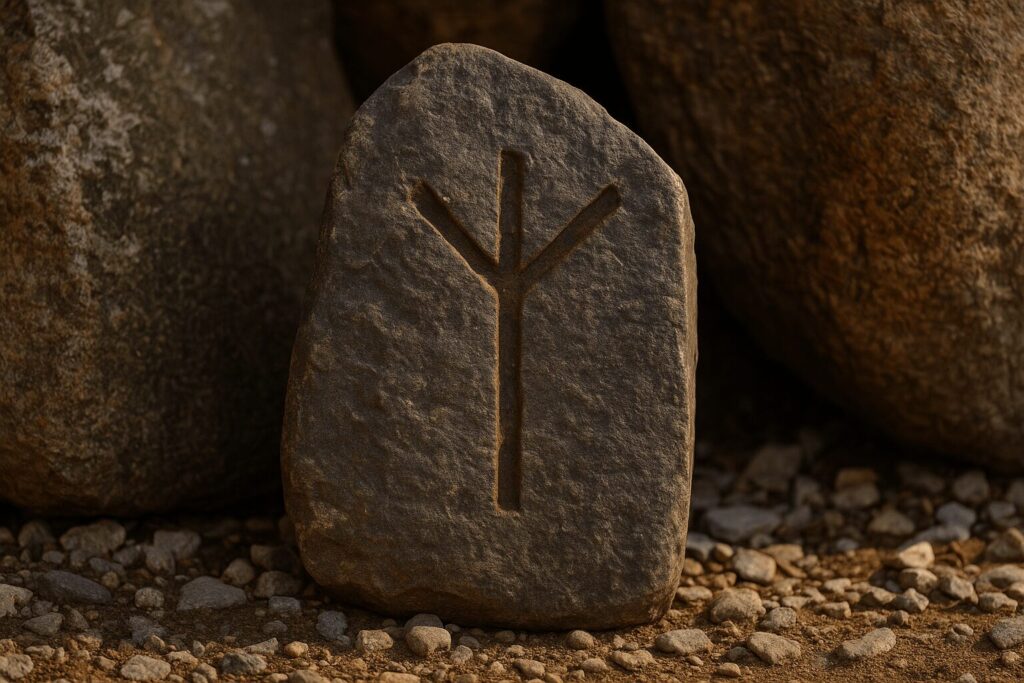
The earliest rune inscriptions show up on everyday objects people carried – combs, spearheads, jewelry, and amulets. Later on, the same writing appears carved into larger stones used as memorials or boundary markers.
Because carvers worked with hard materials, they favored straight strokes that cut cleanly.
As a result, Elder runes look geometric – staves, branches, diagonals, and tidy angles. If you’ve ever struggled with curvy scripts, you may find these runes refreshingly direct.
At the same time, the system functioned as writing. It marked names, claims, and events. Over time, the characters also took on symbolic weight through poems and traditions.
Therefore, when modern readers explore Elder Futhark Norse rune lore, they find their grounding in both artifacts and the way these signs were actually used.
A good rule of thumb is this: start with the phonetic value, then consider the cultural context, and finally decide how the idea applies to your task today.
Readers often ask which ideas matter most when interpreting runes. For practical work, I suggest three main categories: resources, boundaries, and movement.
For instance, Fehu and Jera belong to resources, pointing to wealth, growth, and cycles. Algiz and Tiwaz fit into boundaries, guiding protection and fairness. Raidho and Ehwaz belong to movement, shaping travel and partnership.
When you pull a small spread, group the runes into these categories and write one clear sentence for each. This way, the reading becomes a plan you can act on instead of a puzzle to overthink.
Over time, if you keep a notebook, you’ll see how Elder Futhark rune meanings highlight patterns – showing you where steady effort pays off and where a pause can save you trouble.
A simple routine keeps rune practice clear and useful. For the first two weeks, stick with single draws. Each morning, pull one rune, write down its name, and answer five quick prompts:
Because it’s short, you’ll actually repeat it. With repetition, the runes stop feeling strange and start becoming a practical language for planning your day.
After that, move on to three-rune draws: Context / Present / Guidance. Keep the questions concrete, like “What should I emphasize in training this week?” or “Where is the friction in this project?”
Remember, clear questions create useful notes, while vague questions only give you vague answers.
When creating bind runes, it helps to keep the design simple and give each part a reason for being there. For example, here are three patterns that stay legible whether carved or sketched:
When you build Elder Futhark bind runes, always draw the lines so the original runes can still be recognized. In other words, avoid crowding the design just to make it look fancy.
Because if the bind looks clever but reads unclear, it won’t serve its purpose.
People often want results quickly, so I keep the first week both tight and realistic.
Day 1 – The sequence. Write all 24 Elder runes twice. As you do, say each name out loud. Then, circle any shape that feels awkward in your hand.
Day 2 – Five key signs. Pick Fehu, Algiz, Raidho, Kenaz, and Tiwaz. Next, copy their shapes and write one practical cue for each.
Day 3 – Short inscription. Choose a museum photo or a bookplate. After that, sketch four characters, transliterate them into Latin letters, and record your best guess at the meaning.
Day 4 – One-rune day. Draw a single sign at breakfast. Then, make one decision based on it and record the outcome in your notebook that evening.
Day 5 – Pairing practice. Create a small bind rune for your commute. Be sure to keep the lines clean and test legibility at arm’s length.
Day 6 – Review and refine. Read back through your notes. Meanwhile, underline what worked and write down two changes for next week.
Day 7 – Three-rune check. Draw Context / Present / Guidance for the week ahead. Finally, convert the result into three scheduled actions.
Because the steps are short, this routine only takes minutes each day – yet it builds muscle memory fast.
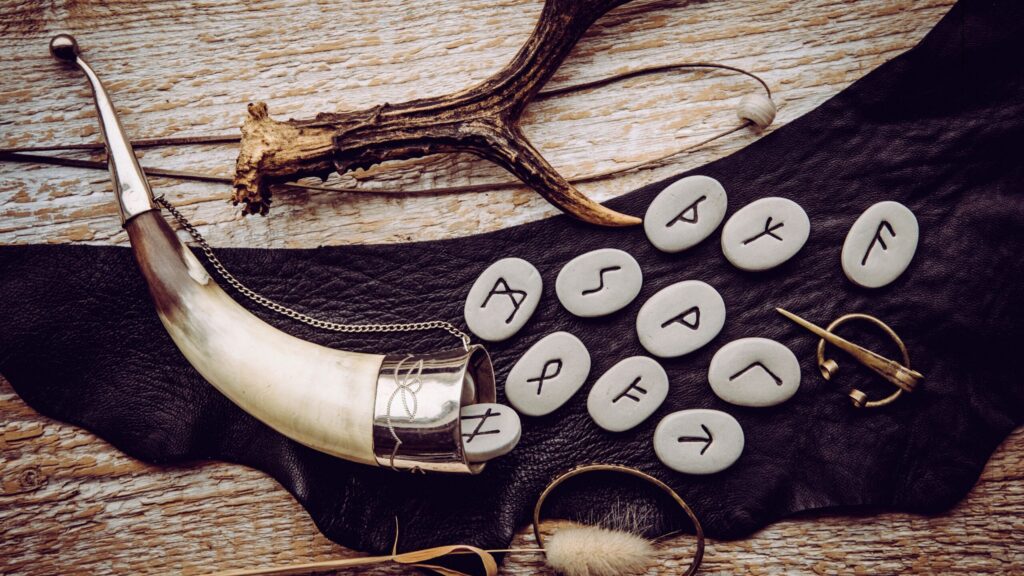
You don’t need a big, expensive kit to get started. Instead, a small set of rune stones or cards, a pen, and a notebook will serve you far better than a drawer full of unused gear.
If you want a dependable starter, the Elder Futhark set with handbook is a solid option that ships widely.
Runes aren’t only for divination – they’re also an alphabet you can write with.
To start, try transliterating your own name, then a short motto.
Next, label a tool you lend out or copy a line from a stone you admire. Because writing demands precision, this practice sharpens your eye and builds trust in your hand.
As you continue, you’ll notice how carving feels different from writing with ink. The runes were born for wood, bone, and stone, which is why their shapes are so sharp and clean.
If you’re curious about source material, begin with well-documented inscriptions. Work from clear photos and reliable translations.
After a few sessions, your own transliterations will start lining up with published versions – and that’s a good sign your study habits are on the right track.
Once you’re comfortable with the Elder runes, it helps to look at how they changed in the Viking Age. As speech evolved, the alphabet was shortened into the Younger Futhark, which uses only 16 signs.
Because of this, many learners prefer to master the Elder Futhark first, since its 24 characters give a fuller picture of early Germanic sounds.
That’s why some rune stones in Sweden look like they use a ‘thinner’ alphabet – the carvers were working with the later, reduced system.
Take your time, though. With a strong foundation in Elder runes, moving into the Younger Futhark will feel natural and much easier.
People often ask about rules, here’s my take on it.
First, cite your sources whenever you copy a design.
Second, treat readings as tools for planning and guidance, not as promises of the future.
Third, respect privacy if you draw for someone else.
Finally, always tie a reading to one clear action you or someone else can take within 24 hours.
Because of these habits, the practice stays clean, and your notes remain useful when you come back to reread them.
Are Elder runes used for fortune-telling or writing?
Both.
On one hand, inscriptions show they were used for everyday writing. On the other, later traditions added reflective or divinatory use.
Therefore, if you start with the alphabet itself, your readings will be much clearer.
How do I avoid confusing Elder with later sets?
It’s simple: count the characters and note the shapes.
If you see 24 signs, you’re looking at the Elder Futhark. If you see 16 with some altered forms, it’s the Younger Futhark. A quick count saves confusion.
What if my drawings look uneven?
In that case, practice on graph paper for a week. The grid will train your hand, and even small corrections in angle will make the runes look sharper.
Do I need to memorize extended definitions?
No. Instead, stick to short cues. Over time, your daily notes and personal examples will replace the need for bulky lists.
Can I blend systems or symbols from elsewhere?
You can, but it’s best to master one alphabet first. That way, when you do blend later, your base will already be clear and steady.
The case for Elder runes is straightforward.
Because the set is early, complete, and well attested, it gives us a clear alphabet with strong cultural roots that still feels relevant today.
To begin, learn the sequence, copy a few inscriptions, pull one rune each morning, and write down a single action you’ll take.
As your notes build up, you’ll notice the shift: steadier timing with Raidho, sharper decisions with Tiwaz, stronger boundaries with Algiz, and brighter focus with Kenaz.
If you practice in small, regular steps and check your progress, you’ll improve steadily. Before long, the Elder runes will feel like a practical tool you can use whenever you plan, study, travel, or set boundaries.
That’s the real value of Elder runes and the reason Elder Futhark study matters: an ancient set of signs that help you center and focus, and guide you through the obstacles of life with confidence and clarity.