Physical Address
304 North Cardinal St.
Dorchester Center, MA 02124
Physical Address
304 North Cardinal St.
Dorchester Center, MA 02124

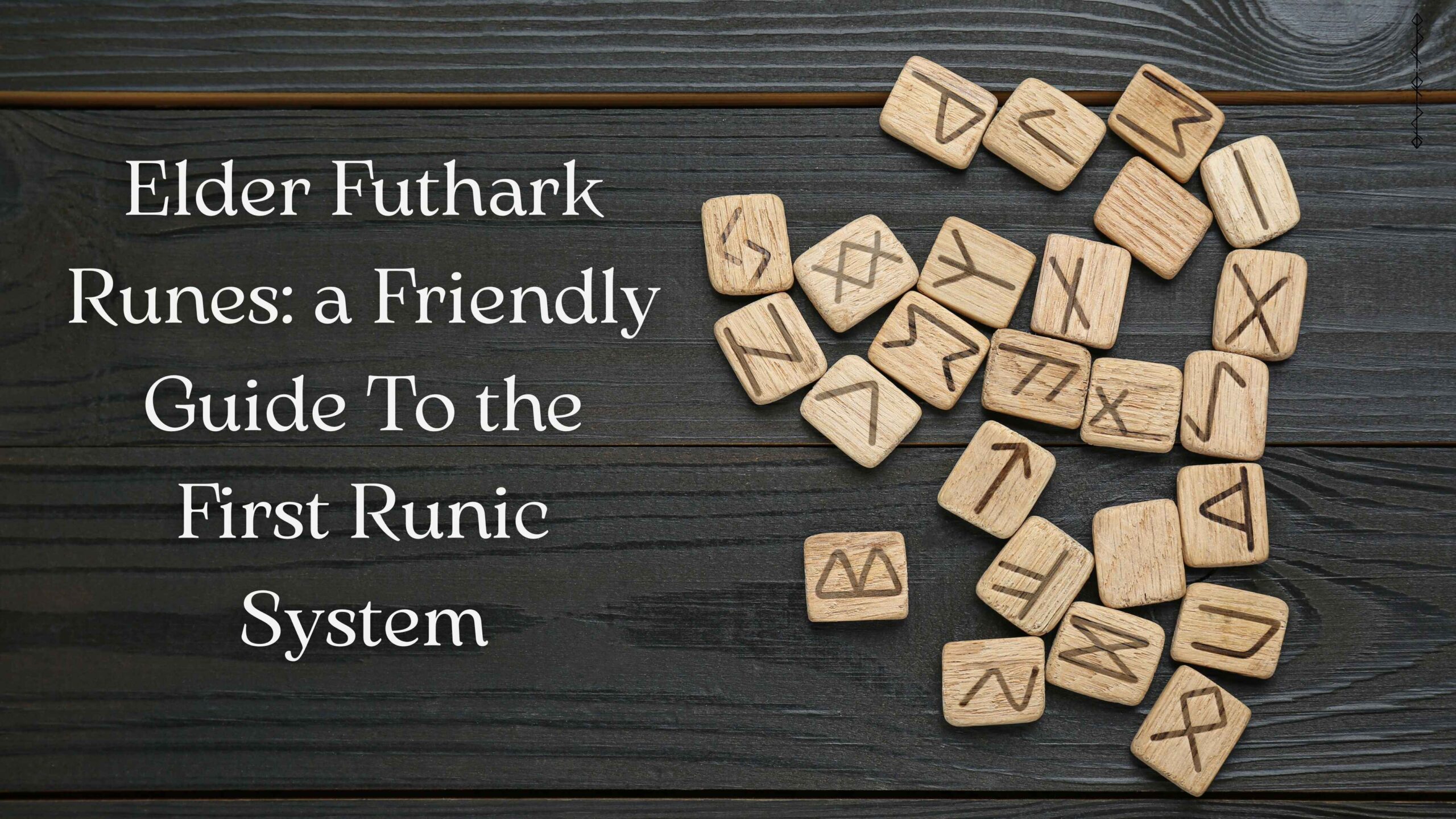
Elder Futhark runes are the oldest form of the runic alphabets used by Germanic tribes, particularly during the early centuries of the Common Era. It consists of 24 runes and is named after the first six letters: F, U, Th, A, R, and K. The Elder Futhark is believed to have been in use from around 150 to 800 CE and is primarily associated with the early Germanic peoples, including the Norse and Anglo-Saxons.
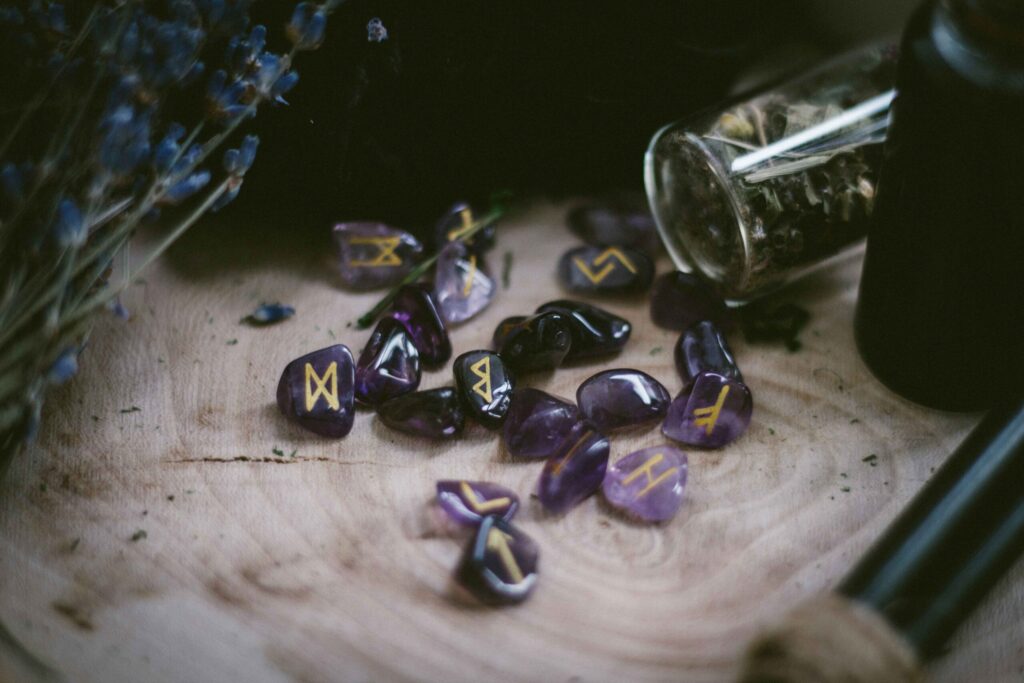
People search for Elder Futhark runes because they want a guide. Those sharp, angular marks show up on stones and jewelry, and the question is always the same: what do they mean, and why did they matter?
The short answer is this: the Elder Futhark is the oldest full runic alphabet, used from about the 2nd to 8th centuries. It worked as writing, but each rune also carried ideas about life – work, travel, law, belief.
Learning this script gives you two things. First, a way to read some of the earliest voices of the Germanic world. Second, a compact toolkit for reflection that still works in the present.
The Elder Futhark runes form a 24-character alphabet, named from its first six letters: F-U-TH-A-R-K. You’ll find them carved on bracteates, spearheads, combs, and memorial stones across Scandinavia and beyond.
Their shapes grew out of contact with Mediterranean alphabets but were adapted to northern needs – easy to carve into wood, bone, and stone.
When people talk about the Elder Futhark, they usually mean two things at once: letters and meanings.
Each rune marks a sound, but it also carries a word from early Germanic life – like cattle, yew, hail, sun, or daybreak.
A single character could spell a name and at the same time hint at a theme. Once you’ve read a few inscriptions, that double role starts to feel natural.
Before the Viking Age, people used an earlier form of runes (what we call Proto-Norse) that already lines up with the Elder Futhark.
As speech shifted, the script did too. By the Viking Age, the runes had been reduced to sixteen characters – the Younger Futhark.
That smaller set fit the sounds of the time, but it often confuses beginners. This is why it’s best to start with the Elder Futhark, where the evidence is broader and the meanings clearer, and only then move on to the Younger set.
Archaeology confirms the timeline. Finds like the Vimose comb and the Kylver stone show us early forms and dates, while regional styles reveal how carvers solved practical problems in different ways.
Still, the basic sequence of runes stays relatively the same – which makes it easier for you to learn how to work with them.
The Elder Futhark covers both consonants and vowels, drawn in clean straight lines.
Since they were carved into wood, bone, and stone, curves were avoided – the runes look geometric, built from angles, branches, and stems.
When you transliterate, you map each rune to its closest Latin letter or cluster – like TH for Thurisaz or NG for Ingwaz.
The best way to learn is hands-on. Write all twenty-four runes each morning for a week, saying each name out loud.
Then copy a short inscription from a museum photo and check your work against a reliable source. Soon the shapes will feel natural in both your hand and your voice.
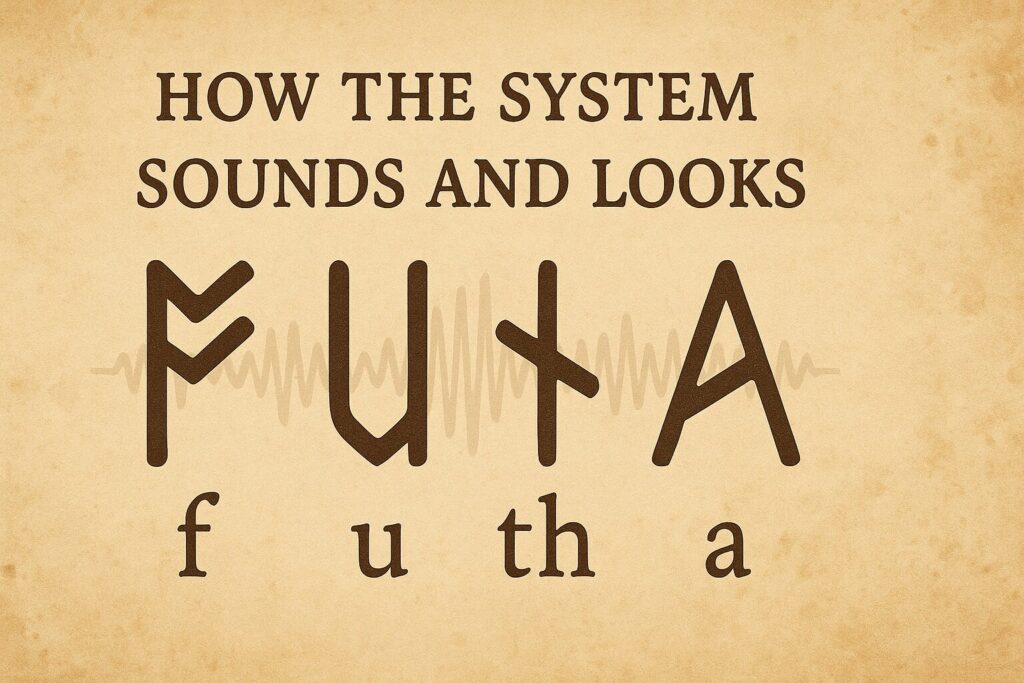
Rune meanings work best as brief, practical cues. They are not fortune-telling devices but ways of focusing attention.
Taken together, the Elder Futhark runes offer a compact system where each rune carries both sound and symbol, allowing even a short sequence of three runes to suggest priorities, highlight challenges, and point toward action.
When you see runes carved on an object, the first step is to slow down and really look. Ask yourself which system you’re dealing with – Elder Futhark runes, Younger Futhark, or Anglo-Saxon.
Sketch the symbols, then match each one to its nearest Latin letter. Don’t expect neat spacing; some inscriptions use dots or marks to break words, but many run straight together.
Spelling wasn’t standardized either, so focus on finding a clear, reasonable translation instead of chasing perfection.
You may also spot bindrunes – two characters joined into one design. They can look mysterious, but they’re usually practical, a way to save space or add style.
Separate them into their original runes and test both readings. With patience and a simple glossary, even difficult inscriptions start to make sense”.
The alphabet of the Elder Futhark runes can still be used in modern life in simple, meaningful ways. You might write a name on a card, mark a journal, or copy a line from an inscription that inspires you.
For reflection, draw a single rune in the morning and note how its theme connects to your day. Because each symbol is compact, it’s easy to carry the idea with you as a reminder.
If you choose to use runes for divination, keep the practice simple and practical. A three-rune draw – Context, Present, and Next Steps offers enough insight to work with.
The value comes from linking the meanings to choices you can act on, helping you make a decision in difficult or confusing times.
Day 1: Print a clean chart of the 24 Elder Futhark runes. Write the whole row out twice by hand to get the shapes into your memory.
Day 2: Copy a short real inscription – something from a photo of a stone or artifact. Focus on accuracy, not speed.
Day 3: Write your own name and two place names in runes. Check which extra sounds need special attention.
Day 4: Pull three runes at random and journal how they connect to your week. Keep it practical.
Day 5: Sketch a simple bindrune, like Raidho + Algiz for safe travel.
Day 6: Pick two historical artifacts. Note three details about each—material, region, and the order of the runes.
Day 7: Test yourself. Write the whole sequence from memory, then compare it with the chart to see what stuck.
By the end of the week you’ll be surprised at how much you can already do. The steps are short, but they build real confidence fast.
Keep the cycle going for a month and you’ll be ready to read beginner inscriptions without hesitation.
Good study needs a solid guide. You can browse blog posts; however, a proper guide book save you a lot of time and guesswork.
For an easy introduction with clear transliteration tables and artifact context, I recommend starting with a classic field text on the Elder set.
If you want a straightforward option delivered fast, here’s an easy place to look: Elder Futhark runes handbook.
Are Elder Futhark and Viking runes the same?
They’re related, but not identical. The Elder Futhark has twenty-four runes and was used earlier. In the Viking Age, the alphabet was reduced to sixteen runes, known as the Younger Futhark.
If you’re learning, it makes sense to start with the Elder Futhark for broader coverage.
Can I write modern English with them?
Yes, with limits. Some sounds match easily, while others don’t. It won’t be perfect, but practicing this way helps you get comfortable with the shapes and keeps the script alive.
Do rune meanings come from magic or daily life?
Both. The keywords grew out of everyday realities (like cattle, storms, and travel) but they were also woven into myth and ritual. The most practical approach is to treat meanings as lenses for reflection, not as fixed prophecies.
What about authenticity in art or jewelry?
Look at a few museum pieces for inspiration, then adapt with care. Keep the letter forms clear, and avoid mixing Elder Futhark runes with later versions unless you explain your choice.
That way your work stays respectful and legible.
Elder Futhark runes are the easy door in. They’re the earliest full set, the shapes are simple because they were made for carving, and the ideas still land – money, timing, courage, boundaries.
Start here. Learn the 24 signs. Do short, simple readings. When that feels natural, step into Proto-Norse and then the Viking-Age set with context under your feet.
Keep the practice small. Write the sequence. Copy one line from an inscription. Read one stanza from a rune poem. Do that a few times a week and your eyes stop guessing – you start reading.
If you like a ritual, keep it light. Pull one rune at night and ask, “What’s the one thing to do tomorrow morning?” Then do it.
Give it a few weeks. The curiosity turns into a craft. The Elder Futhark becomes a steady tool you actually use.