Physical Address
304 North Cardinal St.
Dorchester Center, MA 02124
Physical Address
304 North Cardinal St.
Dorchester Center, MA 02124

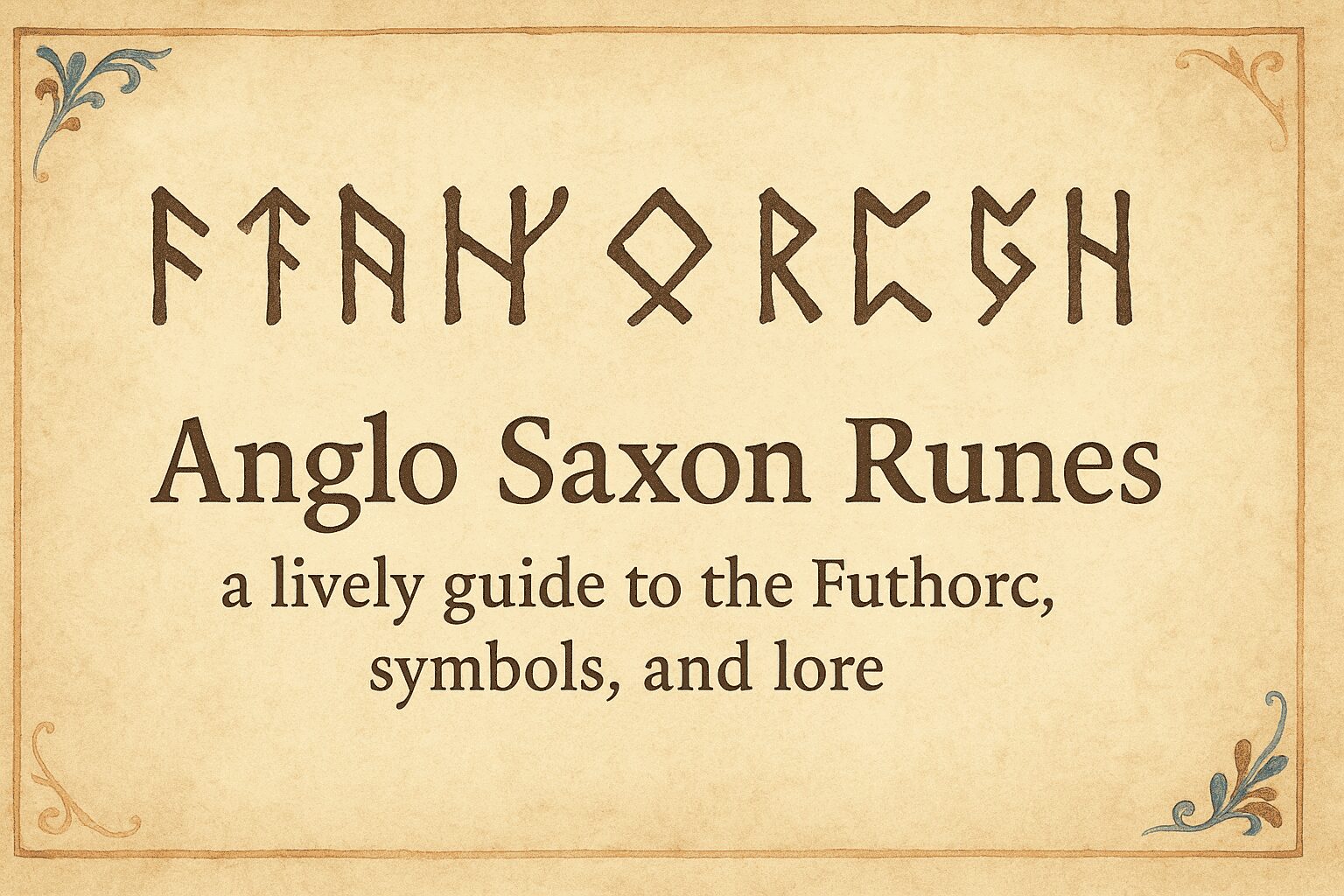
Anglo Saxon runes, also known as Futhorc, are a set of characters used by the Anglo-Saxons and early Medieval Frisians for writing in Old English and Old Frisian. This runic alphabet evolved from the earlier Elder Futhark and was adapted to meet the phonetic needs of the Old English language.
People search anglo saxon runes because they want to know what those long, spiky letters mean in Old English inscriptions and manuscripts.
Here’s the quick answer: anglo saxon runes – often called the Anglo-Saxon Futhorc – are an expanded runic alphabet used in England and parts of Frisia from late antiquity through the early medieval period.
They evolved from the Elder Futhark, added extra letters to fit Old English, and show up on stone crosses, coins, jewelry, and in verse. That’s the gist. Now let’s turn it into something practical and useful.
The Anglo-Saxon Futhorc is a runic alphabet of roughly 28–33 characters, depending on region and era.
It evolved from the 24-letter Elder Futhark used on the continent. English speech added new vowel sounds and diphthongs, therefore scribes introduced extra runes – like ᚪ (Ac), ᚫ (Æsc), ᚩ (Os), ᚣ (Yr), and ᛡ (Ior) – to capture the richer soundscape of Old English runes.
As Christianity spread, Latin letters took over for everyday writing; however, anglo saxon runes kept appearing on monuments, charms, and art objects where tradition and symbolism mattered.
Meanwhile, you’ll see the name spelled “Futhorc” because the first six runes shift slightly from the older sequence: Feoh, Ur, Thorn, Os, Rad, Cen.
The order acts like a memory hook, which helps beginners internalize the set.
If you want hard evidence, look at famous carved works. The Ruthwell Cross in Scotland bears a runic version of lines from “The Dream of the Rood”.
The Franks Casket, carved from whale bone, mixes Latin and runes into a dense weave of stories. Runes also appear on coins, brooches, and sword fittings – sometimes giving the maker’s or owner’s name, other times short phrases.
Manuscripts like the Old English Rune Poem add another layer, preserving meanings and mnemonics for many characters.
These sources show how runes carried both practical uses and cultural depth.
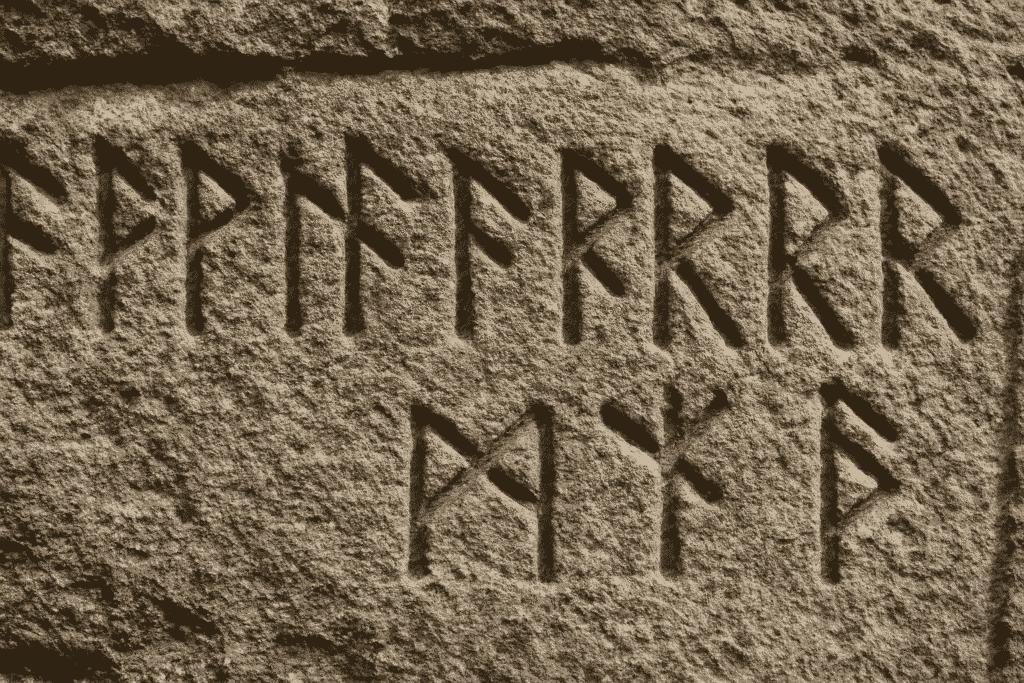
When people moved from the Elder Futhark to the Anglo-Saxon runes, the language had also changed from early Germanic into Old English.
New sounds appeared in the language, so new runes had to be invented. Some old runes were also split into different letters to match the way people actually spoke.
For example, the rune Thorn (ᚦ) stood for the ‘th’ sound. But runes like Os (ᚩ) and Ansuz (ᚨ), which used to overlap, were given separate values in the newer system. This means the same rune shape might be read differently depending on the time period.
On top of that, different regions sometimes used their own versions or names.
For learners today that can feel messy, but it just shows runes were flexible – they kept changing to fit real spoken language instead of staying static.
Runes are letters, but in the Anglo-Saxon tradition they also carry images and ideas.
The Old English Rune Poem ties each rune to a word – for example, Feoh to cattle and wealth, Ur to the aurochs (a wild ox), and Rad to riding. Each verse links the sound of the rune with an image and meaning.
That’s why every rune has two jobs. One is phonetic: spelling words. The other is cultural: carrying meaning and symbol.
Here’s a compact tour of core characters you’ll see often:
Because the Futhorc balances sound and image, anglo saxon runes work as a bridge between literacy and lore. You can write names; you can also meditate on meanings.
Yes, you can learn to use the Futhorc.
Start with the basics, learn the letter values, then copy short inscriptions to get comfortable writing them. Try writing your name, translating a motto, or labeling your journal. This way, the runes feel familiar instead of distant.
If you want a reflective practice, pull one rune each morning and read its verse from the Old English Rune Poem. Notice how it connects to your life – Rad for travel, Feoh for money, Ur for strength.
This light ritual builds intuition without claiming to predict the future.
As for divination, there’s little historical proof the Anglo-Saxons cast runes in formal spreads. But modern readers often adapt simple methods.
If you explore this, keep it honest and practical. A three-rune draw )Context, Challenge, Guidance) is enough to spark insight without overcomplicating it.
When you read a rune inscription, take it slow.
Start by identifying each letter shape. Don’t expect neat word breaks – sometimes you’ll see dots or spacers, but often carvers just ran the letters together.
Spelling also shifts depending on time and region, since there was no single standard.
If you get stuck, write down the Latin letter for each rune and see what Old English word fits best. With patience and a glossary, most puzzles open up.
Also keep an eye out for bindrunes – two runes joined into one symbol, often to save space or for decoration. They can look striking, but most of the time they’re practical rather than mystical.
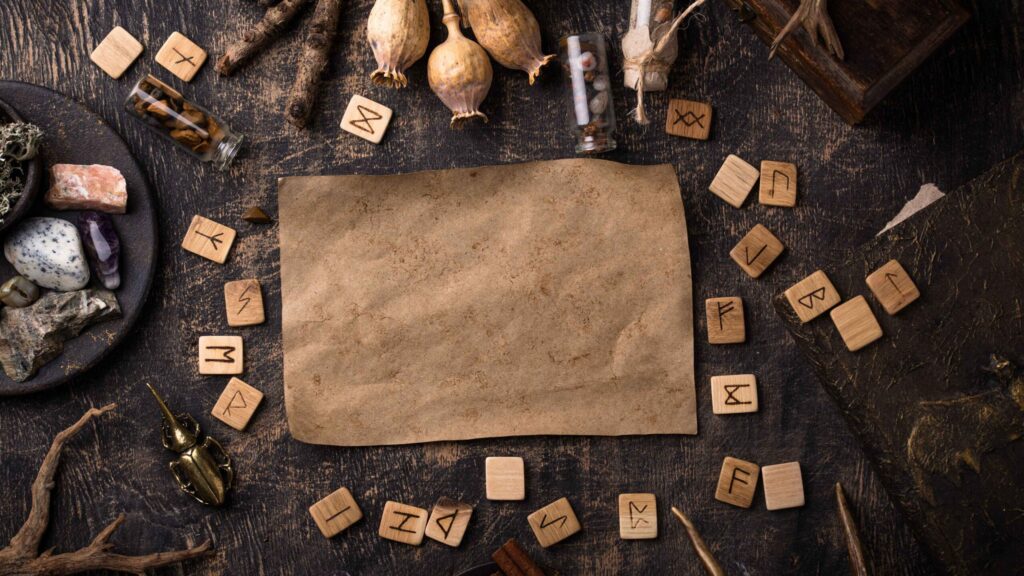
You don’t need a big kit to make progress. What you do need is a clear reference you’ll actually read. If you want a reliable guide that covers history, letter values, and real inscriptions, start with this book.
It’s the classic entry point for anglo saxon runes, and it keeps you grounded in real evidence.
A one-week starter plan
Day 1–2: Learn the alphabet.
Write out the full rune row by hand, twice. Say each name out loud – Feoh, Ur, Thorn, and so on. The shapes and sounds will stick faster that way.
Day 3–4: Write names.
Try your own name, your town, and a few everyday objects in Anglo-Saxon runes. Use the extra vowels like Æsc or Ac if you need them.
Day 5: Copy an inscription.
Pick one short line from the Ruthwell Cross or the Franks Casket. Copy it slowly, and look up any unfamiliar forms.
Day 6: Read the poem.
Go through five stanzas of the Old English Rune Poem. Write down a one-line meaning for each rune mentioned.
Day 7: Reflect with a draw.
Pull one rune at random and write a few sentences about how its idea fits your week. Keep it practical.
By the end of the week, the runes won’t feel distant. They’ll feel like tools you can actually use.
Did everyone in early medieval England use runes?
No. Latin letters took over in schools, churches, and official records. But Anglo-Saxon runes still showed up on art, memorial stones, and personal items.
Are Anglo-Saxon runes the same as Viking runes?
Not exactly. Both grew out of the Elder Futhark. In Scandinavia it became the Younger Futhark, while in England and Frisia it expanded into the Anglo-Saxon Futhorc. The English version added more symbols to match Old English sounds.
Can I write modern English with the Futhorc?
You can, with limits. Some letters map easily, but others don’t. Treat it as playful practice rather than a perfect system.
What about magical use?
Today, many people use rune meanings as tools for reflection. If you try it, keep notes, respect boundaries, and skip the big claims. The more grounded your approach, the more insight you’ll actually get.
The phrase “Anglo-Saxon runes” points to a flexible writing system that was also a cultural mirror. They began as letters, but they carried images and values too.
You can still see them carved into stones, stamped on coins, and preserved in poems. Learn the shapes, names, and verses, and you’ll start reading inscriptions with confidence.
The magic shows up in daily life. Feoh might remind you to manage your money, Rad to plan your travels, Cen to focus on study. Those runes are a set of characters that are still relevant today if you work with them properly.
Keep your practice simple and consistent.
Copy a line, translate a name, chant a few runes on a walk. Stack these small steps for a month, and Anglo-Saxon runes won’t feel like a museum piece anymore.
They’ll feel like a living craft – sharp, memorable, and helpful.