Physical Address
304 North Cardinal St.
Dorchester Center, MA 02124
Physical Address
304 North Cardinal St.
Dorchester Center, MA 02124

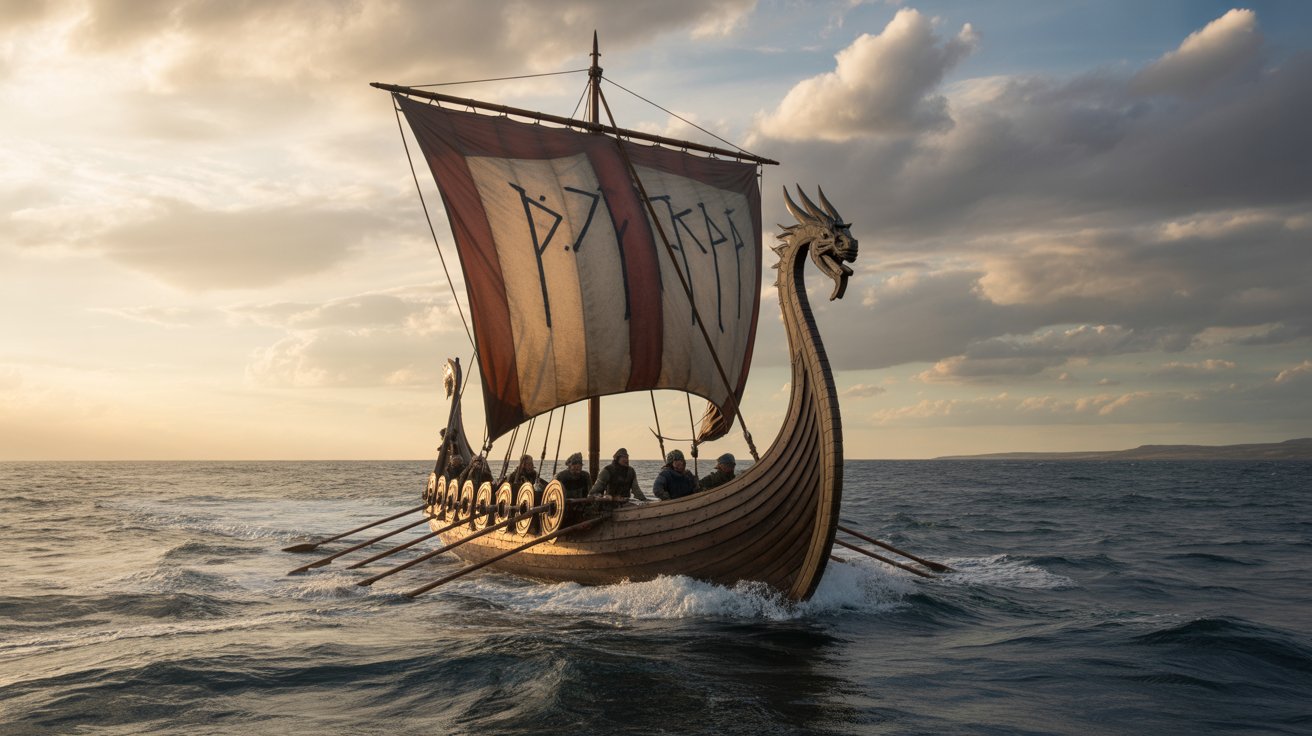
Norse paganism describes the pre-Christian belief system of the Norse and other Scandinavian peoples.
People today also call it the Norse pagan religion, the pagan religion of the Vikings, or simply the old ways.
You’ll also hear the term Nordic pagan, which usually means someone who follows similar northern European traditions, often with a modern approach.
Because this belief system keeps drawing new interest, a lot of people now search for “norse paganism for beginners,” and not just for curiosity. They want to practice it.
In this guide, I’ll walk you through what Norse paganism actually is, what the gods represent, how the worldview works, and how people practice the faith today.
I’ll also keep things grounded, because the internet loves drama and fantasy, and Norse paganism deserves more respect than TV battle scenes and horned helmets.
Norse paganism is a living spiritual path with deep historical roots. It started in Scandinavia and Iceland before Christianity spread across the region.
However, it did not disappear. People still practice it today in modern forms. They often call themselves Norse pagan, Nordic pagan, heathen, Ásatrúar, or followers of the old gods.
Because the modern world loves labels, people sometimes expect a clean definition. Norse paganism does not give you that.
It never worked like one single church. The pagan religion Vikings followed did not have a pope, a Bible, or a central authority.
Instead, it grew through story, ritual, custom, and oath. Families, local groups, and clans kept their own traditions.
Therefore, the religion always allowed variation. One family might honor Thor first. Another might focus on Freyr for good harvest.
Another might keep close ties to Freyja for love, sorcery, and protection.
You can think of it like this. Norse paganism does not say “believe this exact paragraph or get out.”
Instead, it says “stand in right relationship with the gods, your ancestors, your land, and your word.” That idea matters more than anything else.
When you hear phrases like “pagan religion Vikings practiced,” you might picture nothing but raids and battle frenzy.
That picture ignores reality. Yes, Viking Age culture valued strength and courage. However, daily life also revolved around farming, fishing, trade, family survival, weather, winter, and making sure the animals stayed alive until spring.
Norse paganism answered all of that, not just warfare.
When you explore Norse paganism for beginners, you should start with its structure. Norse paganism is polytheistic.
That means followers honor many gods and goddesses. It is also animistic. That means followers treat the world as alive with spirit.
Land, sea, mountains, forests, and even certain stones can hold presence.
Because of that, the faith does not separate “religion” and “life.” You don’t only honor the gods on special days.
You honor them when you set sail in dangerous water. You honor them when you ask for a safe birth. You honor them when you bring in the harvest and thank the land that fed you.
You also honor your ancestors, because death in this worldview does not erase duty or connection.
This approach builds a network instead of a hierarchy. The gods sit in that network. Your living family sits in that network. Your dead family sits in that network.
The spirits of place sit in that network. You sit in that network. Therefore, your behavior matters. You don’t just pray and then act like trash.
You carry yourself with honor because the network watches.
Because Norse paganism uses story to teach, we should talk about the gods. You already know some names. Now you’ll understand what they actually stand for.
Odin, often called the All-Father, sits in a strange and powerful place. People outside the faith paint him as just a war god.
That version misses his real nature. Odin seeks wisdom with savage hunger. He gives up one of his eyes for deeper sight.
He hangs himself on the World Tree, wounded by his own spear, to seize the runes and unlock magic and knowledge. He speaks with the dead and drinks from wells of memory and fate.
Because of that, Odin represents leadership, poetry, sorcery, strategy, madness, sacrifice, and vision. He does not act soft. He acts relentless.
When a modern Norse pagan says “I follow Odin,” that person usually means “I value knowledge, will, and transformation, even when they hurt.”
Thor stands as one of the most beloved gods in the Norse pagan religion. Farmers, sailors, and craftspeople trusted him.
Thor protects the community. He defends humans against giants and destructive chaotic forces. He carries Mjölnir, the hammer, which symbolizes reliable force and sacred protection.
During the Christian conversion period, many people wore Thor’s hammer pendants. They did it to declare loyalty to the old ways and to call down safety. T
hor represents strength, yes, but also stability. He says, “You are under my guard. I hold the line.” Because of that, people still call on Thor for protection of home and family.
Freyja rules love, beauty, desire, passion, independence, and sorcery known as seiðr. She also takes half of the honored dead into her hall.
Odin takes the other half. That detail shocks people, because pop culture claims only Valhalla matters. Reality tells a different story.
Freyja’s claim to the fallen shows that feminine power in Norse paganism stands on equal ground with masculine power.
Freyja’s energy feels unapologetic. She owns her choices, teaches self-possession, and carries dignity and danger together.
Many modern followers, especially beginners, feel drawn to her first because she gives them permission to stand fully in themselves.
Freyr blesses the land. He governs peace, fruitfulness, growth, healthy herds, and human well-being.
While Thor holds the wall, Freyr makes sure people can thrive inside that wall. During hard winters, people offered to Freyr for mild weather and survival.
During planting and harvest, they honored Freyr for plenty.
Because of this, people who live close to land and cycles often feel a strong bond with Freyr. Gardeners, farmers, and anyone who cares about stability and community life still call on him.
Loki brings chaos, trickery, and transformation. He breaks rules. He crosses boundaries. He insults the gods and also saves them.
Loki represents motion, creativity, discomfort, and the truth that nothing stays fixed forever. You will find debate around Loki among modern Norse pagans.
Some followers honor him. Some followers avoid him. The tradition always allowed disagreement, so that debate fits the pattern of Norse paganism instead of breaking it.
Norse paganism includes many other holy figures. Frigg, often linked with foresight and care for the household, stands in high honor.
Tyr represents justice, law, and bravery that demands sacrifice. The Norns weave fate itself. The land spirits and house spirits guard place and home.
Because of that, a Norse pagan does not only talk to Odin and Thor. A Norse pagan also talks to the field behind the house, the forest at the edge of the village, and the ancestors in the grave mound.
If you want to understand Norse paganism for beginners, you need to understand how the worldview shapes behavior. The myths entertain you. The worldview guides you.
Norse paganism teaches that fate exists. The Norns weave the thread of every life. The gods know that Ragnarok will come one day.
Ragnarok means the final struggle and the fall of much of the known order. Therefore, even the gods cannot dodge fate forever.
Now, this part sounds dark at first. However, Norse pagan religion turns it into strength. If fate will come, you stop pretending you can live forever.
You start asking, “How do I carry myself while I stand here?” You focus on courage, loyalty, and reputation. You live like your name matters. You stop running from fear. You face what arrives with honor.
People still love this mindset today. It feels honest. It does not lie about life. It does not promise endless comfort. Instead, it says, “Yes, life tests you. Stand up anyway.”
The pagan religion Vikings followed ran on oath. People swore oaths on sacred rings, weapons, or holy places.
They treated those oaths as binding. If you failed your oath, you damaged your name, your luck, and sometimes your entire bloodline’s social standing.
Modern Norse pagans still take this seriously. They talk about honor like it’s real, because in this faith, it stays real. Your actions define you.
Your promises define you. Your reliability defines you. Don’t hide behind pretty words. You stand up to what’s right.
Because of that, many serious practitioners say that you cannot only “study Norse paganism.” You need to live it.
You need to follow through. You need to protect the people who trust you. You need to respect your own word.
Norse paganism connects the living and the dead. Your ancestors still matter. They don’t sit in some unreachable afterlife with zero contact.
Instead, they stand close. They guide you. They judge you. They support you, and they expect you to respect them.
Many modern Norse pagans build ancestor altars. They light candles for grandparents and great-grandparents. They speak names.
They pour offerings. This practice does not feel like fiction to them. It feels like family loyalty stretched across time.
The Norse pagan religion treats land and nature as full of presence. Because of that, followers show respect before they take.
Sailors ask the sea for safe travel. Hunters acknowledge the forest. Farmers thank the soil and the rain. People leave offerings for house spirits.
People greet land spirits out loud. This behavior does not come from fear. It comes from recognition. You live inside a world that holds power. You should act like you know that.
Modern Nordic pagan practice often leans into this part with intention. People treat hiking, growing food, fishing, foraging, and even cleaning their home as spiritual acts.
When you live with that awareness, you don’t drift through life numb. You feel rooted.
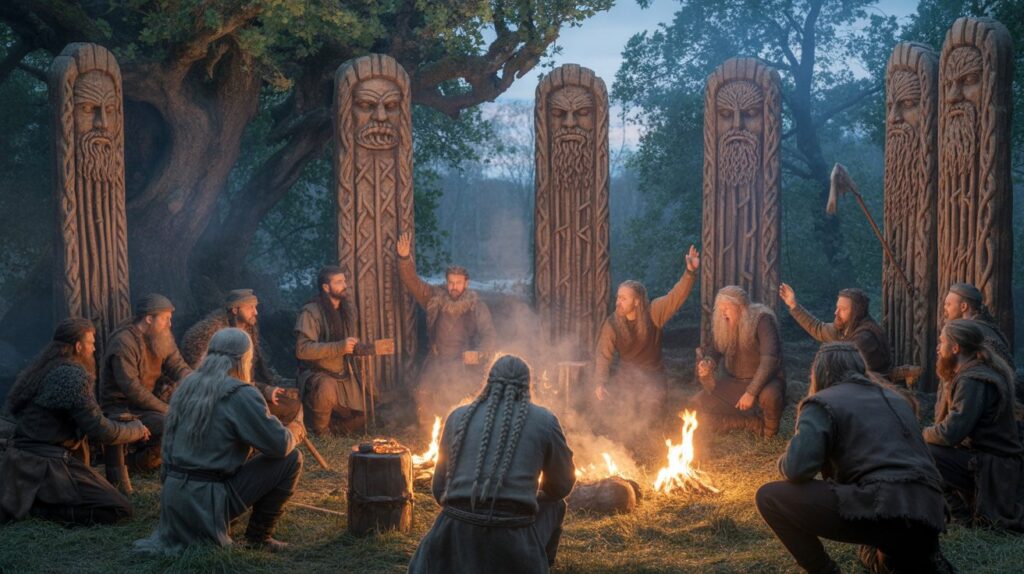
Now let’s talk about what actual practice looks like, because theory feels empty without action.
One of the central rituals in Norse paganism is the blót. Blót means offering. During a blót, you give drink, food, or another meaningful gift to the gods, spirits, or ancestors.
You speak words of thanks. You might ask for strength, luck, wisdom, healing, peace, or guidance.
Historically, communities sometimes held large blóts with feasting. Households also held small blóts in private.
Today, modern Norse pagans still perform blót. Some pour out mead or ale. Some offer bread, honey, or clean water. Some speak quietly in their kitchen at night.
Others gather in groups for seasonal rites.
Blót works on a simple rule. You give respect, and you ask for respect. You don’t grovel. You build a bond.
That style fits the entire logic of Norse pagan religion, because it treats gods and humans like partners in an ongoing relationship.
Norse paganism follows the seasons in a direct way. Yule marks deep winter and the turning of the sun toward longer days again.
Midsummer honors light and life at their peak. Important harvest moments call for thanks to Freyr. Dangerous sea journeys call for protection from Thor.
Because of that, faith sits right inside survival. You don’t separate “real life” and “religion.” You live both together.
Modern Nordic pagan groups often observe Yule, Midsummer, and other key points of the year.
They light fires, share ritual drink, call on deities, and honor ancestors. They don’t just “recreate Viking cosplay.” They build living tradition that still matters now.
Many Norse pagans keep a small altar at home. The altar might include symbols of Odin, Thor, Freyja, or Freyr.
It might also include a candle, a bowl for offerings, and a stone or branch from local land. This space works like a personal meeting ground.
You talk there. You give thanks there. You ask there.
Because Norse paganism puts so much weight on oath and behavior, daily practice also includes how you act. You try to keep your word.
You try to protect the people under your care. You try to build a name that your ancestors can respect and your descendants can carry.
You also try to stand upright when life pushes you, because the gods respect will.
People sometimes treat Norse paganism like a museum piece. However, the faith continues. It grows. It evolves. Therefore, we need to talk about what it means right now.
Some modern Norse pagans focus on ancestry. They want to reconnect with the spiritual world of their northern European roots.
They feel like Christianity or modern culture cut that line, and they want to repair it. This path feels like return.
Other followers come from outside that ancestry. They feel the call of the gods anyway. They respect the stories.
They accept the values. They build honest relationships with the deities and the land. They walk the path with sincerity, not shallow costume energy.
This path feels like adoption.
In both cases, people choose Norse paganism because it feels real. It demands personal strength. It rewards loyalty. It respects land.
It honors honest desire. It also refuses to lie about struggle.
The world feels rough and unstable right now, so a worldview that teaches courage, oath, and presence hits people in a way that many modern systems fail to reach.
Because of this, Norse paganism for beginners keeps trending. People don’t just want entertainment from Viking shows. They want a code, a spine, a sense that their actions matter, and that their word carries weight.
If you feel drawn to Norse paganism, you don’t need to sign a membership card. Instead, you start with respect.
You learn the stories of Odin, Thor, Freyja, Freyr, and the rest. Sit with what those gods actually stand for, ask yourself why they pull you in.
Watch your own behavior in daily life, because Norse pagan religion cares more about your honor than your aesthetic.
After that, you build relationship. You speak out loud to the gods and to your ancestors. You pour a small drink and offer it with intention.
Listen. Notice how you feel in forests, at the ocean, in storms, or under open night sky. Take responsibility for your own word. Protect the people under your care. Stop pretending that your life does not matter. Your life matters a lot.
Finally, you keep walking. You will make mistakes. Everyone makes mistakes. The gods do not ask you for perfection. They ask you for honesty, willingness, strength, and respect.
That mindset sits at the heart of Norse paganism, and it always did.
When you live that way, you don’t just study an ancient culture. You step into it. You carry it forward. You become part of it.