Physical Address
304 North Cardinal St.
Dorchester Center, MA 02124
Physical Address
304 North Cardinal St.
Dorchester Center, MA 02124

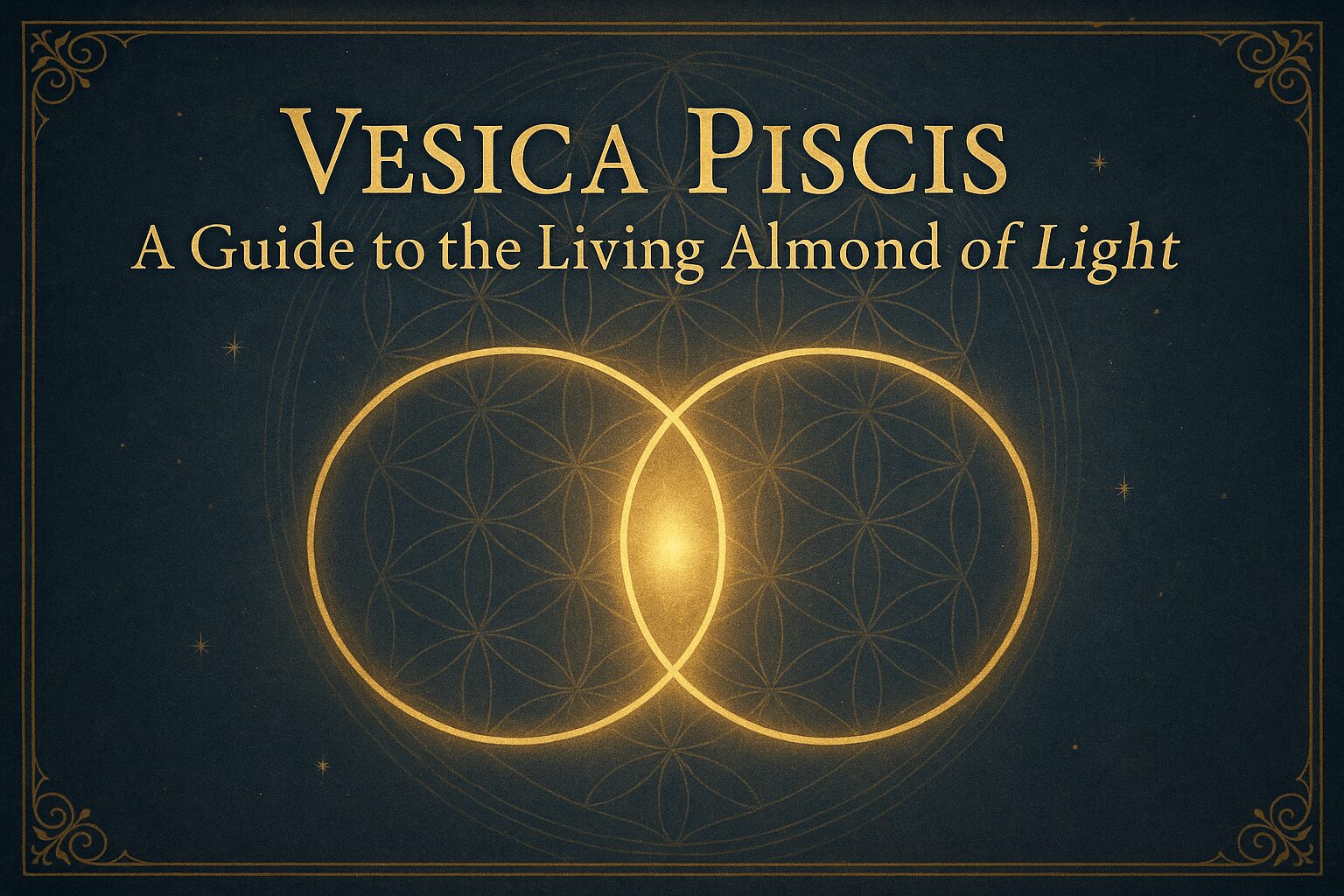
The Vesica Piscis is a geometric shape formed by the intersection of two circles of the same radius, where the center of each circle lies on the circumference of the other. This shape has significant mathematical, spiritual, and symbolic meanings across various cultures and traditions.
The Vesica Piscis is the lens formed where two identical circles overlap so that each circle’s center sits on the other’s circumference.
At first glance the Vesica Piscis shape looks like a neat almond, yet it holds a lot of quiet math.
Because the circles are equal, the height of the lens becomes √3 times its width when each circle has a radius of one.
Therefore, a clean and memorable ratio appears without any complex tools. Moreover, you can build the whole thing with only a pencil, a compass, and a steady hand.
Although the construction is tiny, the implications are big. The overlap creates a zone where symmetry rules.
Consequently, triangles, hexagons, and hidden grids start to show up once you trace a few key lines. In practice, that means the Vesica Piscis geometry offers a friendly way into proportion and balance.
Additionally, the shape scales up and down perfectly, so it works on pendants, page layouts, stained glass, and even cathedral plans.
People also love how the figure feels both calm and alive. Because the arcs meet at crisp points, the eye follows a gentle loop without getting stuck.
As a result, the shape makes a natural focus aid during drawing, journaling, or breathwork. Furthermore, it teaches a hands-on lesson: complex order can arise from simple rules applied with care.
In short, the Vesica Piscis is a small, precise doorway into a larger world of patterns.
However, it stays welcoming, which is why beginners and experts both return to it again and again.
When people ask about Vesica Piscis sacred geometry meaning, they are usually after two things: a clear explanation and a felt sense of why it matters.
Start with what you can see. Two equal circles meet, and a new space appears between them.
Therefore, the figure often stands for meeting points, shared ground, and beginnings.
Moreover, traditions across time have used it to speak about birth, passage, and the spark that happens when separate things connect.
History adds texture without making the idea heavy. Medieval builders drew the figure while setting out arches and windows.
Consequently, that simple lens helped define entire façades. Artists tucked it behind saints and in mandorlas to frame moments of revelation.
Meanwhile, craftspeople learned proportions by hand, long before calculators existed.
Because the rules are visual, you can learn them by tracing and repeating rather than memorizing formulas.
The math still helps. The √3-to-1 height-to-width relationship shows up in many layouts because it feels balanced.
Additionally, the intersections inside the Vesica Piscis guide clean placements for titles, icons, and centers of interest.
As a result, the same diagram can act as a spiritual emblem, a design grid, and a teaching tool.
However, the meaning you take from it can stay modest and practical. If you simply enjoy how it steadies your attention, that is already valuable.
Furthermore, returning to the figure over time tends to deepen your reading of it, because new details appear as your eye grows more patient.
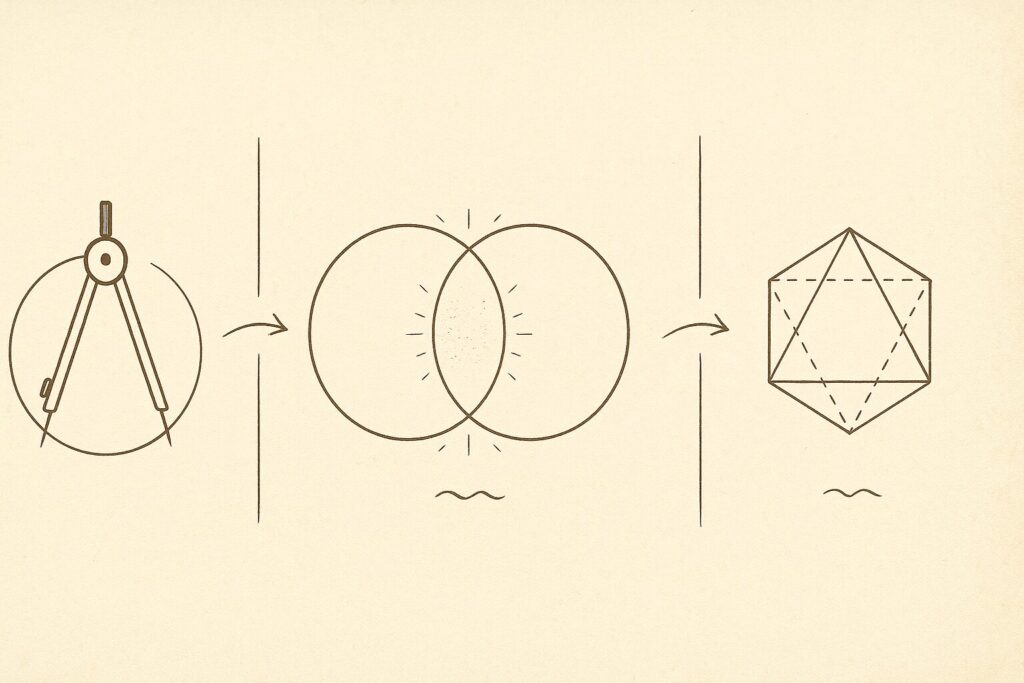
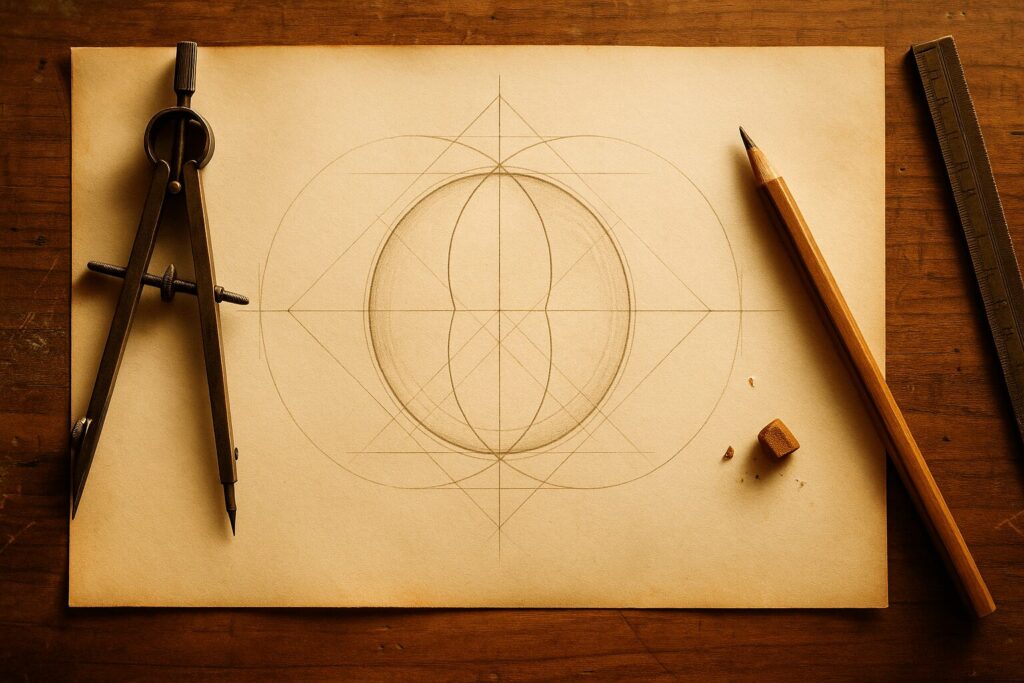
If you really want to understand the Vesica Piscis, draw it. Place a circle, set your compass point on its edge, and draw a second circle of the same size.
Consequently, the lens appears at once. Keep your pencil light, then darken the final curve when you’re happy with the symmetry.
Moreover, try measuring the height and width; you will see the √3 relationship in action. Therefore, the Vesica Piscis geometry becomes more than an idea. It becomes a friendly lab on your desk.
Next, explore uses. Trace a vertical line through the crossing points to anchor a poster or a journal spread. Additionally, drop a triangle inside the lens to feel how the angles align.
Because the arcs guide the eye, photos and headlines often sit better when they follow the internal rhythm.
Meanwhile, color the two circular caps differently and the center field pops forward. As a result, the shape turns into a quick layout helper you can trust.
If you prefer something you can wear close every day, a Vesica Piscis pendant is a beautiful option.
The overlapping circles form the same timeless lens shape, yet here it becomes a symbol you carry with you rather than draw on paper.
Because the Vesica Piscis shape represents balance and unity, many people choose it as a reminder of harmony and calm.
Moreover, a pendant allows you to keep that sacred geometry meaning with you during work, meditation, or daily life.
Explore this elegant Vesica Piscis pendant here and find a piece that’s both stylish and meaningful.
However, do not chase machine-like perfection.
The subtle wobble of a human line adds warmth and keeps the process fun. In the end, play is the point, and the insights come faster when you stay curious.
Search for Vesica Piscis Jesus and you will find a trail through Christian art. The lens often appears as a mandorla, the almond-shaped halo that frames Christ in Majesty on icons and stained glass.
Because the figure signals a threshold, artists used it to show a passage between earthly and divine. Consequently, the viewer feels invited into a shared space rather than pushed back by a wall of gold.
Moreover, the same lens echoes the outline of a fish, which early Christians used as a quiet sign of identity and hope.
This link does not mean the shape belongs to one faith alone. However, the Christian use offers a clear example of how form and story support each other.
Two circles meet, and something new appears in the middle. Therefore, the lens becomes a visual metaphor for union, incarnation, or revelation, depending on the scene.
Meanwhile, the simple construction kept the symbol easy to reproduce in stone, paint, glass, and fabric.
Art history aside, the lesson remains practical. When you place a figure, a logo, or a short quote inside a Vesica Piscis, the content gains focus without harsh borders.
Additionally, the twin points at the top and bottom create a natural axis for symmetry. As a result, the composition settles.
Furthermore, viewers who do not know the backstory still feel the calm pull of the arcs. Because the geometry is doing the quiet work, the message can stay simple and direct.
In this way, tradition, craft, and daily design all meet in one helpful shape.
The best part about the Vesica Piscis is how useful it is. Start small by dropping it under a logo sketch.
Because the intersections arrive exactly where you need anchors, letters and icons snap into balance with less effort.
Moreover, the lens makes a natural frame for product badges, app icons, and seals. Consequently, your designs gain a gentle order that people feel even if they cannot name it.
Additionally, the figure scales cleanly on screens and on paper, which keeps production simple.
Writers and teachers can use the shape, too. Print a faint Vesica Piscis on a journal page to guide headings and notes.
Therefore, the layout stays clear without rigid boxes. Meanwhile, math and art classes can team up around the same project: build the figure, find the √3 ratio, then explore color and pattern.
Because the process mixes measurement with play, students often relax and learn faster. Furthermore, the activity works well for mixed ages, since each person can go as deep as they like.
Life outside the studio also benefits.
Before a tough call, trace the lens slowly and match your breath to the curves. As a result, your focus steadies.
However, remember to keep the practice light. The aim is not to chase a perfect drawing but to notice how small rules can create large clarity.
In closing, the Vesica Piscis remains a compact teacher. It explains proportion with pictures, supports stories without noise, invites patience, and it rewards it.
Consequently, this simple, beautiful shape keeps earning a place in both old cathedrals and new notebooks.