Physical Address
304 North Cardinal St.
Dorchester Center, MA 02124
Physical Address
304 North Cardinal St.
Dorchester Center, MA 02124

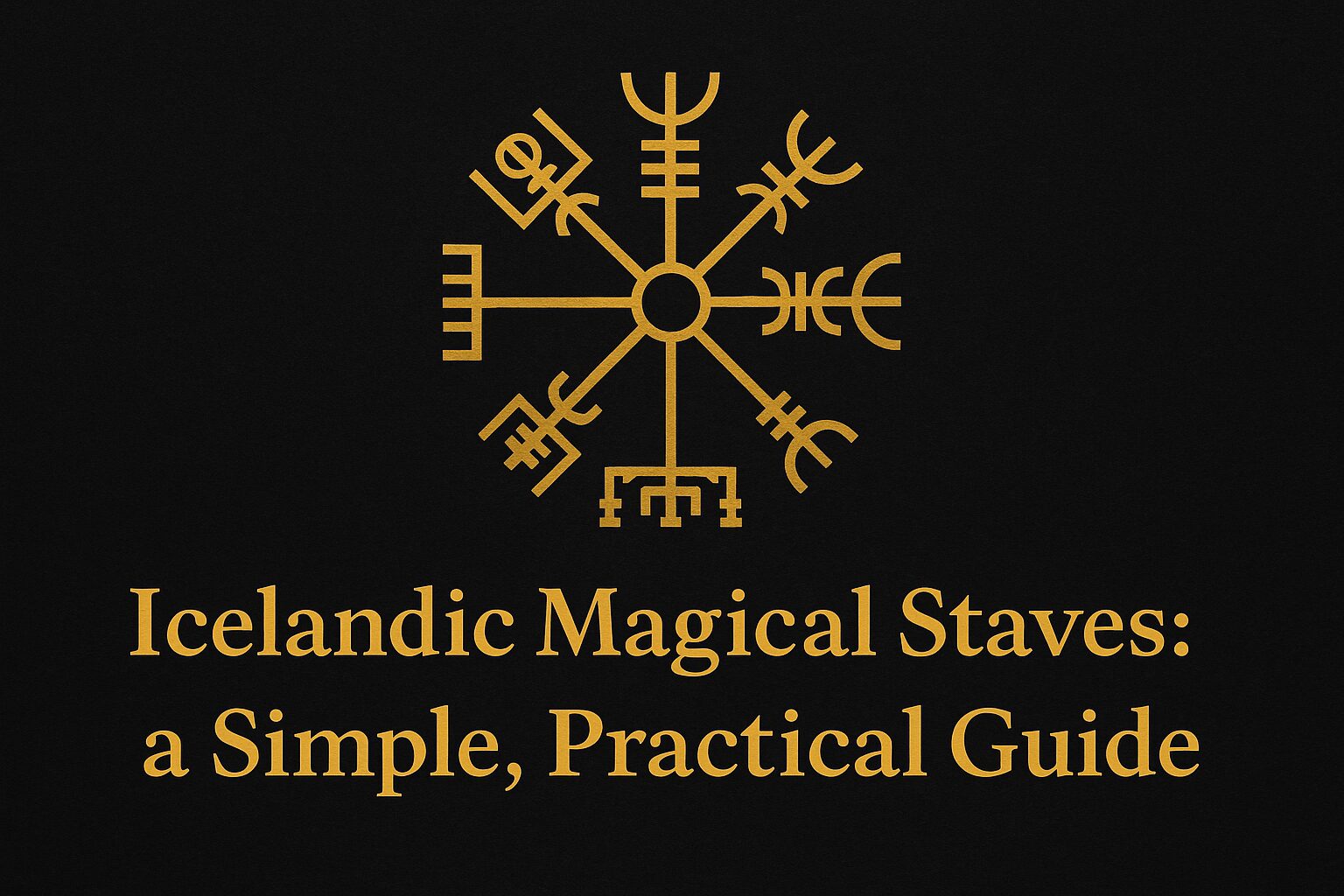
Icelandic magical staves, known as “völva” or “galdrastafir,” are symbols used in traditional Icelandic magic and folklore. These staves are often associated with protection, healing, and various magical practices. They are typically drawn or carved and are believed to hold specific powers or meanings.
When you hear the phrase Icelandic magical staves, think of mysterious symbols drawn in old spell books, rooted in the cold landscapes of Iceland.
These sigil-like designs come from the island’s folk magic, preserved in ancient manuscripts and still used by some people today.
This guide explains what Icelandic magical staves are, where they came from, how people use them today, and how you can read the most common symbols without getting lost in jargon.
Old Icelandic texts describe a stafur (one of the magical staves) as a symbol drawn for a clear purpose, such as protection, guidance, luck, or victory.
The manuscripts usually explain the design, its use, and sometimes include a spoken charm to go with it. So instead of thinking of these staves as random doodles, picture them as compact “recipes” written in symbols.
The shapes often look geometric because they’re built from runic strokes, circles, and branching lines.
But the design isn’t just for decoration – each stroke channels the intention in a certain direction. In that way, the layout works like a little map for carrying out the task it was meant for.
Most Icelandic magical staves come from early modern Iceland, copied into handwritten manuscripts. Later collections often repeated or reworked those same patterns.
So if you’re looking for the meaning of a stave, the answer usually lies in those old pages.
The scribes who recorded them lived in a Christian society but still carried memories of Norse tradition. That’s why a stave might call on the Trinity while also using runic shapes.
This mix shows how important context is. These symbols weren’t meant as museum pieces, they were tools, made to be used on a boat, on a farm, or during a dangerous journey.
When you study Icelandic magical staves, begin with their written purpose. If the manuscript says “for protection on the road”, that already tells you the goal.
After that, look at the main line of the design. A strong vertical axis usually serves as the anchor for the intent.
From there, notice the details – branches often suggest extending or reaching outward, while circles or rings suggest holding or containing.
In other words, the geometry itself gives you clues before you even get into translations.
It also helps to check the ritual notes that sometimes accompany the symbols. These might say which day to draw the stave, what words to speak while writing it, or where to place it.
The instructions form part of the code and define how the stave works.
One of the best-known Icelandic staves is Vegvísir. It looks like a compass, and old manuscripts describe it as a guide to keep travelers from losing their way in storms.
Today, many people wear it as a symbol of guidance or as a reminder to “stay the course” in both travel and life.
Because of its popularity, Vegvísir is usually the first design that comes up when people talk about Icelandic staves.
Another famous symbol is Ægishjálmur, the Helm of Awe. It looks like an eight-armed burst, each arm ending in a trident.
According to the sources, it was meant to inspire fear in enemies and protect the bearer from harm.
Modern readers often interpret it as a symbol of courage and protection, but the original meaning leaned more toward intimidation and defense – fitting for a time shaped by sea voyages, rivalries, and battles.
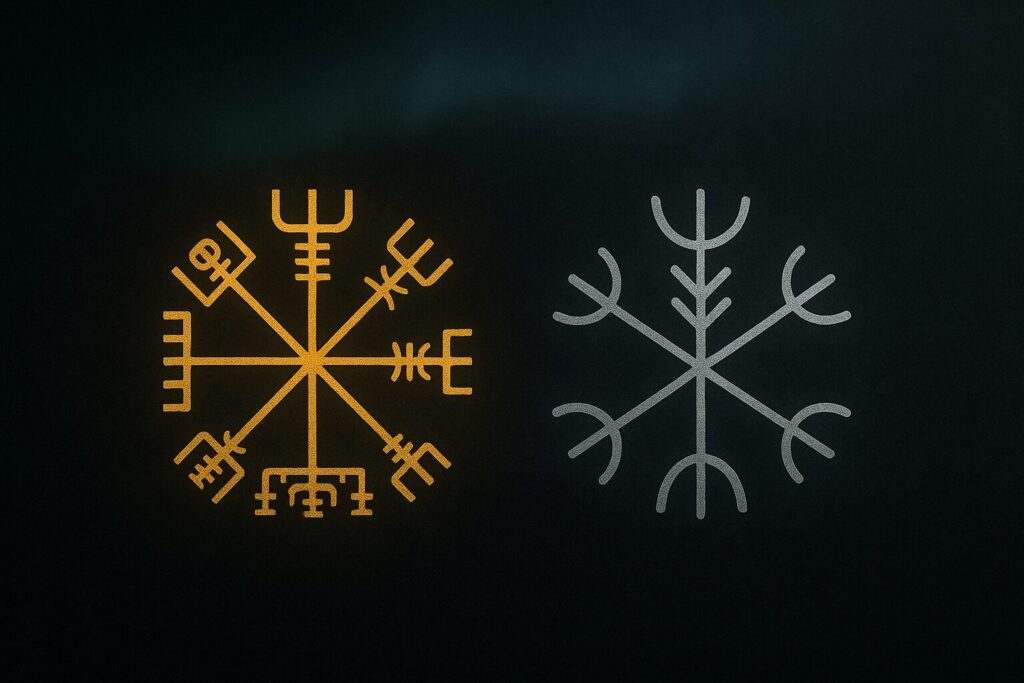
Another important Icelandic magical stave is Veldismagn, a protective sign believed to keep the bearer safe and in good health.
It’s often treated as a general shield, which makes it a natural companion to travel charms. Manuscripts also record other staves meant to guard against thieves, bad luck, or even nightmares.
If you’re studying Icelandic staves in depth, it helps to keep a notebook – sketch each design, note its name, and write down the specific promise attached to it.
That way, the symbols stop feeling like random drawings and become a personal reference you can return to.
One more thing to keep in mind: spelling often shifts.
The same stave can appear with different spellings in Icelandic manuscripts, and English translations sometimes add their own variations.
If a design looks unfamiliar, compare a couple of different sources to be sure you’ve got the right version.
Today, you’ll find Icelandic magical staves on jewelry, tattoos, journal covers, drumheads, and even hiking patches.
Some people draw a stave on paper and keep it in their wallet, while others carve one into wood as a charm. Because intent is central, the symbol is often paired with a short spoken line.
For instance, before a trip you might sketch Vegvísir on a card and say, “Guide me to my destination”.
Modern practice comes with limits, though. A stave isn’t a medical cure or a substitute for common sense. It works best as a focus for courage, direction, or mindfulness.
That way, the results stay grounded – and the tradition gets the respect it deserves.
If you want a starter workbook with clean diagrams and translation notes, here’s a solid pick: Icelandic Magical Staves Starter Guide.
Start by choosing one clear goal – say, safe travel. Pick Vegvísir for this purpose, since the manuscripts link it to guidance through rough weather.
Draw it slowly on plain paper, and as you draw, speak your goal out loud in a single sentence. This ties your words and your action directly to the symbol.
Once you’ve finished, put the paper somewhere meaningful. A backpack pocket or even inside your phone case both work.
Note the date in your journal so you can look back later and see whether the stave feels effective, then adjust your practice if needed.
If your goal is protection instead of guidance, turn to Ægishjálmur or Veldismagn. Always read the original purpose before using a stave.
The promise defines the practice, and staying true to that intent keeps your work focused and clear.
These symbols come from a small island with a deep manuscript tradition, so it’s important to treat them with respect. Don’t use them as a costume or decoration without thought.
If you sell art or share tutorials, cite your sources. And don’t make up promises, stick to what the texts actually say, then add your own reflections clearly as your perspective.
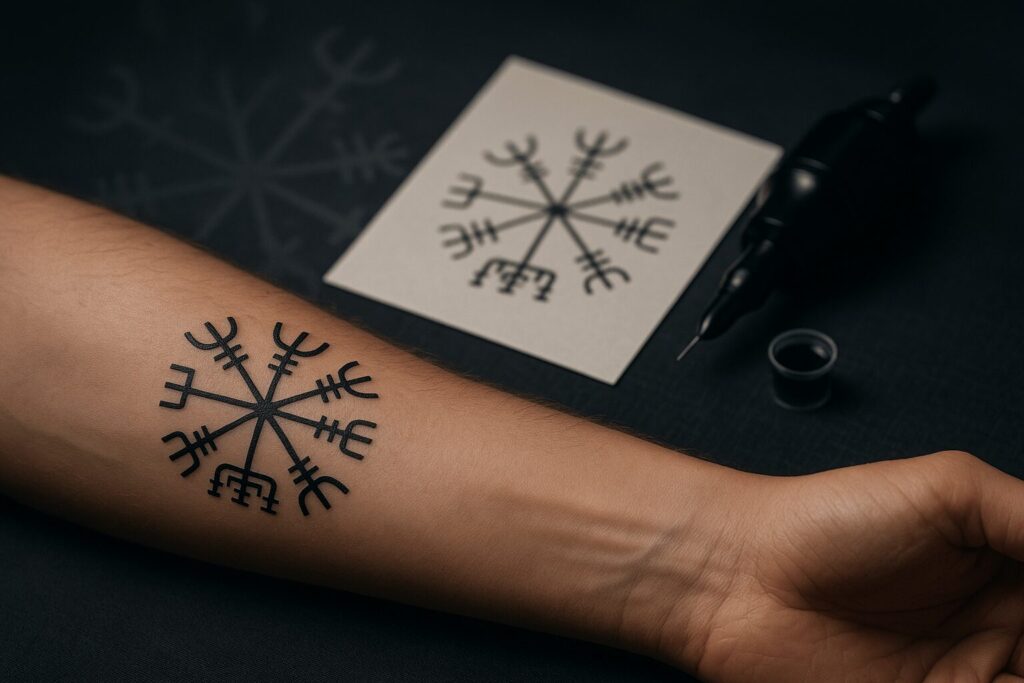
The same care applies if you want a tattoo. Double-check the design, the scale, and the name before you commit.
That way, you’ll carry something accurate on your skin while also honoring the culture that kept these staves alive.
It’s a common belief that Icelandic staves are straight from the Viking Age, but the reality is more complex.
While they draw on Norse and runic traditions, scribes in early modern Iceland recorded most of the designs we recognize today, not Viking-age sources.
So if someone asks for “Viking staves”, the honest answer is that we rely mostly on later texts.
Another myth is that any circular symbol with spokes counts as a stave. In fact, the word stafur refers specifically to symbols with documented uses and instructions in the manuscripts.
Mandalas, fantasy sigils, or other modern creations don’t fall into that category unless a historical source backs them up.
Since the names of staves often vary, create your own catalog. Dedicate a page to each design, draw it carefully, and write the purpose in your own words.
Add a note about where you found it. Over time, your notebook or binder will grow into a personal reference that actually helps you understand the tradition.
When you search online, use specific phrases like “Icelandic staves meaning Vegvísir” or “Icelandic stave symbols protection Veldismagn”.
This approach cuts through the noise and leads you to pages that cite real sources. If a site lists staves without mentioning manuscripts, take caution and cross-check before trusting it.
Icelandic magical staves work best when you approach them with focus.
Before a tough meeting, draw a small Helm of Awe on a sticky note and pause to breathe. On a long trip, slip a Vegvísir into your journal and check it when you stop for a break.
They can also become part of everyday habits, like adding one to your nightly routine of writing down a few lines of gratitude. In moments like these, the stave acts as a steady reminder rather than a superstition.
When someone notices your necklace or tattoo, keep the story short and share where it came from. That kind of honest explanation keeps the tradition alive while making others curious instead of confused.
Icelandic magical staves are practical symbols passed down in manuscripts, each designed for a clear purpose. Vegvísir guides travelers through uncertainty. Ægishjálmur, the Helm of Awe, shields with power and intimidation.
Veldismagn offers protection and general safety. To read these symbols properly, start with their stated purpose, study the geometry, and pay attention to any ritual notes that come with them.
Build your own catalog as you go, and cross-check different sources when names or shapes don’t match.
A simple way to begin is with Vegvísir. Draw it carefully with a travel goal in mind, speak that goal once, and keep the card with your gear.
Linking action to intention gives the symbol weight, you’ll notice its steadiness the next time the road turns difficult.
At their core, these staves still serve as anchors for courage and focus. Approach them with respect, rely on the manuscripts, and keep your practice straightforward.
Do that, and the staves stop feeling like distant mysteries and start becoming everyday tools you can use with confidence.