Physical Address
304 North Cardinal St.
Dorchester Center, MA 02124
Physical Address
304 North Cardinal St.
Dorchester Center, MA 02124

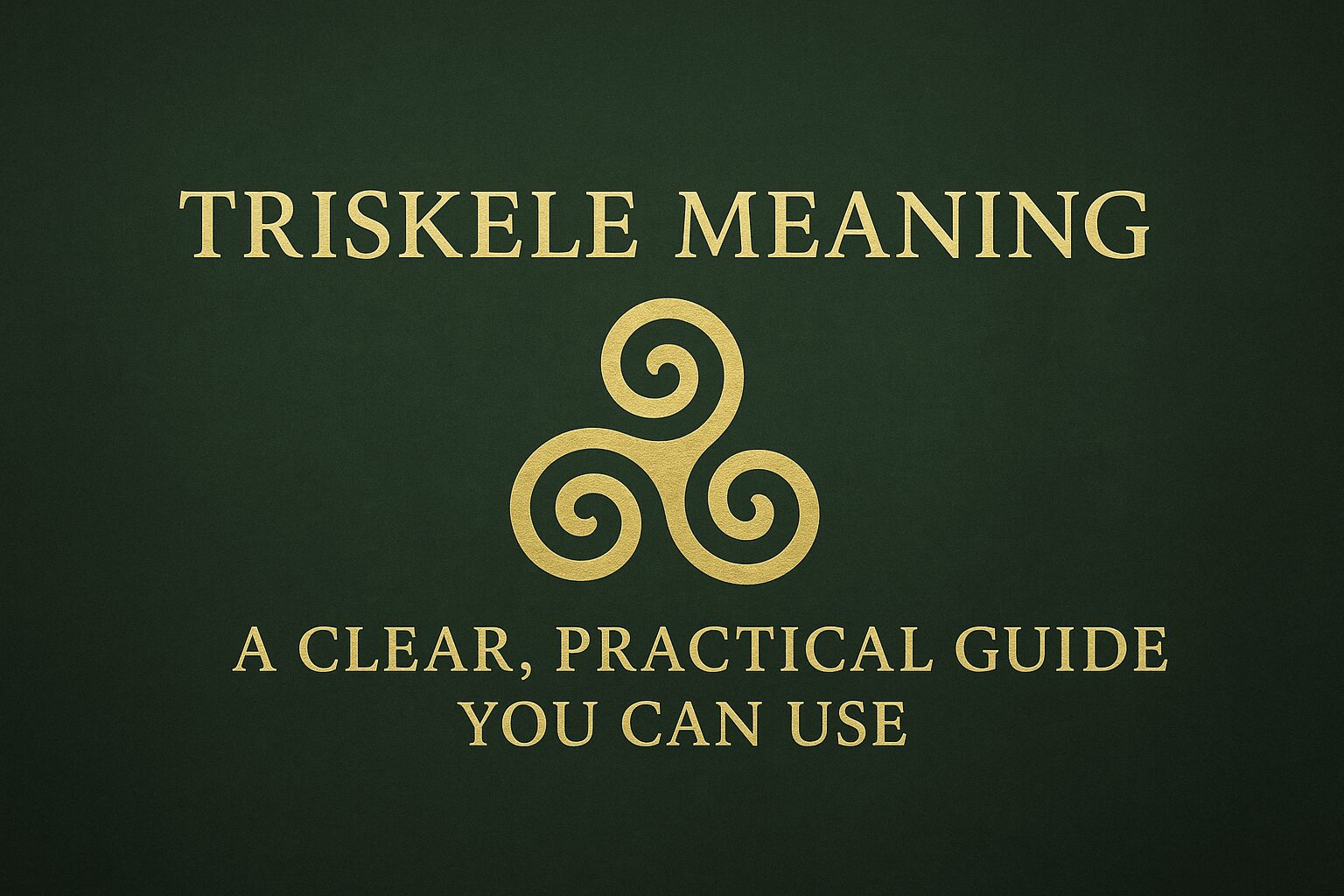
Triskele meaning: also known as the Triskelion, is an ancient symbol consisting of three interlocked spirals or three bent human legs. It has been used in various cultures throughout history, particularly in Celtic and Greek traditions.
The phrase triskele meaning shows up all over the internet, but half the time nobody explains which design they’re pointing to. Here’s the simple breakdown.
A triskele is a three-armed design that suggests movement – most often three spirals or three curved arms spinning out from a center.
A triskelion is the bigger family of “threefold” symbols. That group includes the triskele, but also things like the three-leg emblems on ancient Greek coins or the Isle of Man flag.
Since the shapes and time periods differ, it’s worth noting which one you’re talking about so the meaning stays clear.
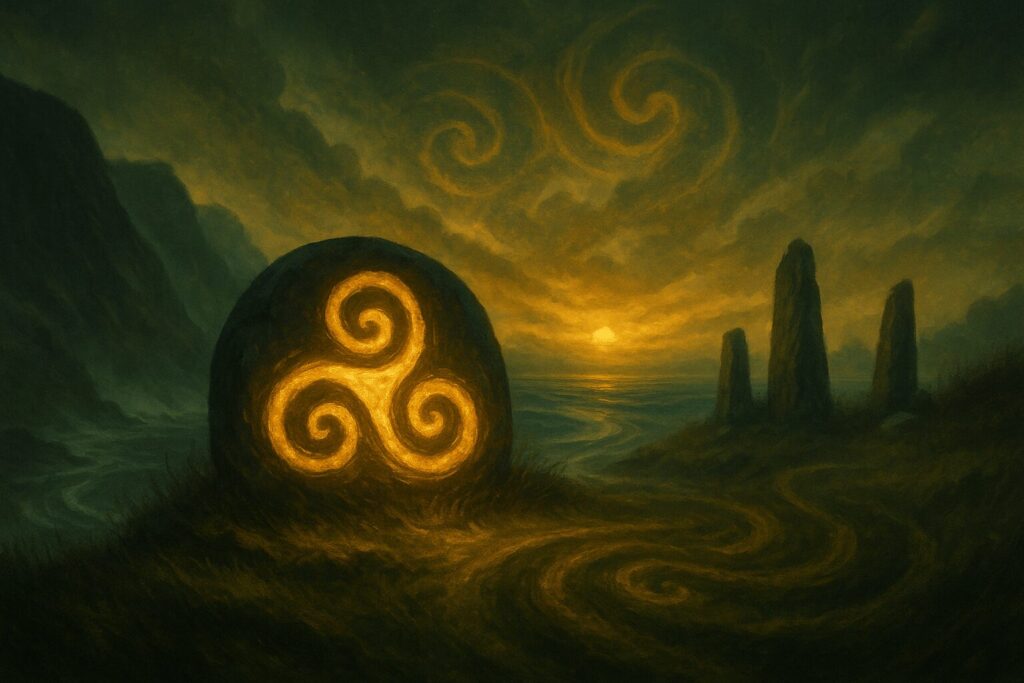
In Irish and British tradition, the triskele usually takes the form of three spirals joined together. You’ll see this spiral version carved into prehistoric stones and later woven into Celtic manuscript art. That’s what most people mean when they say “triskele Celtic”.
In contrast, the triskelion you find in Greek and Mediterranean contexts often shows three bent arms or three legs in motion.
So whenever you spot the word in a museum caption, or even in a tattoo design, pause for a second. Is it a spiral triskele, or is it the three-leg/arm triskelion?
The difference matters, both for historical accuracy and for the style you want to carry forward.
The spiral triskele shows up very early in Ireland, carved into Neolithic passage tombs as part of big rock-art designs.
Centuries later, Iron Age artists in the La Tène style used flowing spirals and threefold whorls on metalwork, keeping that sense of movement alive.
In the medieval period, you’ll find the same triple rhythm decorating Insular manuscripts and carved stones.
Over in the Mediterranean, the triskelion took a different shape. On Greek coins, especially the three-leg version, it symbolized civic pride, speed, and power.
That’s why it’s important to label what you’re talking about. A “spiral triskele in Insular art” is very different from a “three-leg triskelion on a Manx emblem”.
Clear names make the history (and the style) much easier to follow.
Here’s how I make Triskele meaning practical without drifting into vague mysticism. First, I match The meaning of a triskele always depends on the context.
A spiral version carved on an ancient stone often suggests cycles, growth, and return, because the spiral itself shows motion that expands or contracts.
A three-leg triskelion on a flag, by contrast, leans toward ideas like motion, endurance, or sovereignty – legs mean stride, after all.
To keep it simple, it helps to think in “buckets” instead of trying to pin down one fixed definition:
When I see “triskele meaning” in a design request, I always tag the variant: spiral triskele for cycles or leg triskelion for momentum. Being specific keeps the symbol honest and the message clear.
People often type in searches like “Celtic symbol Triskele” or “meaning of Triskelion symbol”. The two words overlap, but I sort them this way: Triskele usually refers to the Celtic-style spirals, while Triskelion is the broader term, often used for the Greek three-leg emblems.
Both share the same core idea – threefold motion.
So if you see the terms mixed up in an article, don’t worry too much. Just check the picture. The design itself will show you which family it belongs to.

Because a Triskele meaning lives or dies by its flow, I check four things.
First, the arms should track a consistent curve or angle so the eye keeps moving.
Second, the spacing between arms should feel even; crowded arcs kill the rhythm.
Third, the center must be calm; tangles at the hub break the balance.
Fourth, context matters: a Triskele Celtic knot border wants softer tapering, while a sports logo wants sharper, bolder arms.
Consequently, I redraw weak arms with a compass or bezier handles until the motion feels confident.
Start by drawing a light circle with a pencil. That circle is just your guide, the “frame” that keeps everything balanced.
Now, put three small marks on the circle at equal distances from each other – 120 degrees apart, like the points of a triangle.
From each mark, draw a spiral that winds inward toward the center. Make sure each spiral arm is the same thickness so they look like they belong together.
Next, check the spacing. The spirals shouldn’t crash into each other, but they also shouldn’t look like they’re drifting apart.
Adjust gently until the design feels balanced. Finally, go over the spirals with ink, and erase the guide circle. Because you built it from geometry instead of guessing, the result will look sharp, intentional, and professional.
I use a compact technical pen for clean curves. If you’re building a design kit, this set is sturdy and cheap: Technical Pen.
When thinking about a Triskele tattoo, start with two questions: do you want the spiral version or the leg-based version, and what story do you want the motion to tell?
A spiral Celtic Triskele meaning on the shoulder speaks of cycles, poetry, and renewal. A three-leg Triskelion on the calf pushes the message of speed, endurance, and grit.
For jewelry, the thickness of the lines makes or breaks the piece. Thin spirals often vanish in casting, so bolder strokes work better.
For logos, it’s the opposite – simplify by trimming away tiny details so the mark holds up even at favicon size. The beauty of the Triskele is that it compresses perfectly into a circle, which is why it looks so strong on coins, seals, or buttons.
Clarity of context adds polish. If you’re calling it “Celtic”, match the design to Insular manuscripts or La Tène art styles. If you’re calling it “Greek”, pull from coins or shields.
That way, your design feels both stylish and historically grounded.
Some people say the Triskele meaning has a single fixed meaning, like the “maiden–mother–crone” idea. That interpretation is actually modern.
You can use it if it fits your own practice, but it’s important to be honest and call it modern. Others claim every spiral is a secret calendar.
While a few ancient carvings may connect to the sun, not every stone is meant to be an almanac.
That’s why I prefer to keep explanations simple and grounded – for example, “this spiral version suggests cycles” works better than making sweeping, absolute claims.
Another mix-up happens with the Triskele and the triple knot. They show up together in manuscripts, but they aren’t the same.
The knot is woven, while the Triskele radiates outward. To avoid confusion, I always make it clear which one I’m pointing to.
First, look at the image. If it’s three bent legs joined in a circle (think Manx flag or ancient Greek coins), call it Triskelion and explain it with words like motion, speed, endurance, and heraldry.
Give a quick example: “three-leg triskelion on a coin → civic power and stride”.
If the image is three spirals or three curved arms radiating from a center (the Insular/prehistoric style), call it Triskele and frame it around cycles, balance, and artistic rhythm.
Example: “spiral triskele in Insular art → cycles, return, decorative border work”.
Always name the variant you’re describing and point to one concrete reading tied to form and context. That way the explanation matches the picture, stays honest about history, and avoids vague, one-size-fits-all claims.
For notebooks, stamp a small spiral triskele to mark a three-step workflow: start → develop → finish.
Training should include a tiny three-leg triskelion pendant works as a “keep moving” reminder.
For design sprints, sketch a faint triskele on the whiteboard to frame three lanes: research → draft → refine.
Here’s a two-minute reset you can run before work. Draw a quick spiral triskele the size of a coin. Label each arm with one task for the day.
Place a dot at the hub for focus. Then trace the arms clockwise with a finger and say the three tasks out loud.
The sequence builds a memory loop. As you finish each task, darken that arm. Consequently, the page itself carries your progress from hub to rim.
Is the triskele always Celtic?
No. The spiral style fits Celtic art, but the three-leg triskelion has strong Greek and Manx histories. Match the meaning to the context you’re using.
Which way should it spin?
Either direction works. Clockwise often feels like growth or outward focus, while counterclockwise often feels inward or reflective. Try both and pick the spin that fits your intent.
Can I combine it with a knot?
Yes – just keep the weave readable. A knot frame around a spiral triskele looks great if the line weights are consistent and the forms don’t crowd each other.
Is there a single triskele meaning?
There isn’t. Think in families: motion, cycles, and threefold balance. The exact meaning depends on the era, the style (spiral vs. three-leg), and where you’re using it.
Now you’ve got the essentials down. A spiral triskele works best when you want to show cycles and balance.
A three-leg triskelion fits when you want to emphasize motion and identity. You also know how to label the variants properly, sketch a clean spiral version, and use the symbol in tattoos, jewelry, or logos without mixing up the history.
On top of that, you’ve seen how to clear up common myths and even how to weave the shape into small daily habits.
So here’s the next step: pick one design and make it real tonight. Draw a spiral triskele with smooth, confident curves, or sketch a three-leg triskelion with bold, driving angles.
Let the drawing speak for itself. With three parts turning around a solid center, the mark will naturally carry meaning – motion with balance, energy with purpose.