Physical Address
304 North Cardinal St.
Dorchester Center, MA 02124
Physical Address
304 North Cardinal St.
Dorchester Center, MA 02124

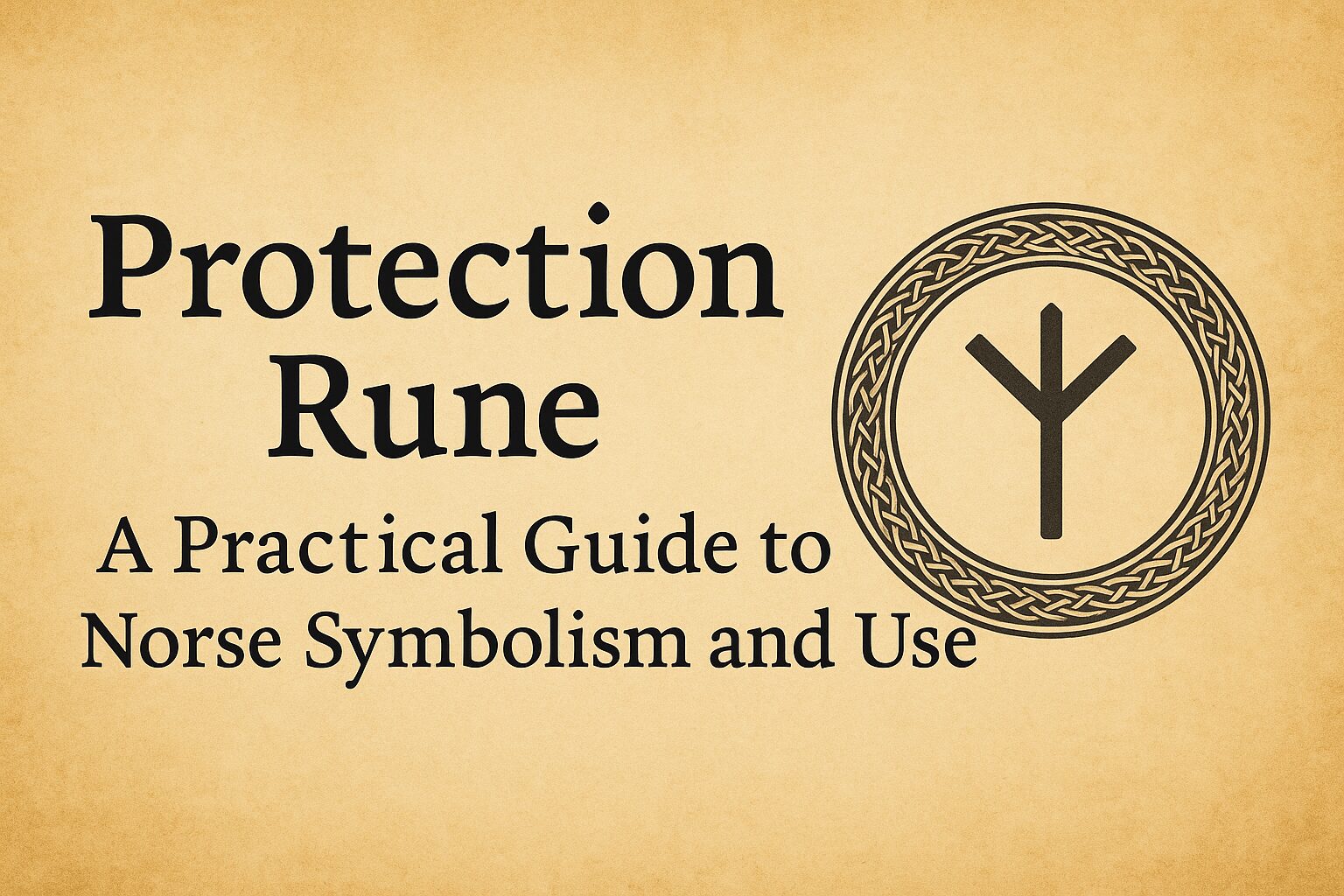
The protection rune is one of the most important symbols in the Elder Futhark runic alphabet. It embodies defense, safeguarding, and spiritual resilience. Its shape is often connected to the image of an elk’s antlers or a person with raised arms, both of which convey vigilance and alertness. Through these associations, the protection rune has long been linked to strength, boundaries, and spiritual growth within Norse tradition.
People search protection rune because they want something solid – a symbol that stands for boundaries, vigilance, and safety.
The best place to start is simple: learn what the rune meant in its original context, pick a method that fits your life, and then practice it consistently.
For that reason, this guide covers the history, the recognizable forms, the ethics of use, and a straightforward routine you can repeat with confidence.
In the old Germanic world, runes were letters made for carving. Each one carried both a sound and an idea.
When people today ask for a protection rune, they usually mean a symbol that marks boundaries, guards a journey, or anchors a promise.
The strongest candidate is Algiz (ᛉ). Its shape looks like a stem with arms raised, and it stands for alertness and warding.
That’s why Algiz shows up so often in amulets, travel charms, and modern rune sets labeled as symbols of protection.
At the same time, no single rune solves everything. Think of Norse protection runes as a small toolbox, not a magic switch.
Algiz sets the guard. Tiwaz adds fairness, Raidho covers safe travel, and Eihwaz gives resilience under pressure. Together, they form a small set of runes you can mix and match to handle real situations.
The idea of a protection rune comes from poetry, everyday use, and common sense. For example, later rune poems connect symbols with images like elk-sedge, sanctuary, or the sun.
In addition, archaeological finds show runes carved on tools, weapons, and memorials – marks of identity and memory. Together, this mix of ritual, reputation, and public statement shaped the concept of a Nordic protection rune.
A rune scratched onto a tool said, ‘this belongs to me.’ A rune worn on a pendant said, ‘I stay alert and I come home safe’.
In the same way, when we talk about a Nordic rune for protection today, we’re continuing that old habit: using a simple symbol to focus attention on safety.
You do not need a large catalog. Start with three forms and learn to write them cleanly.
Each rune has a sound value, but for protection we focus more on the image and the habit it points to. That’s why when you practice writing them, go slowly and draw each line with care.
Sharp lines remind you of sharp boundaries.
I work with three lanes of practice: inscription, carry, and ritual. You can mix them later, but it’s best to start with one lane for two weeks to build focus.
First, inscription. Write the protection rune where it has a purpose. For example, mark it on the page where you list password updates, sketch it in a travel checklist, or etch it on gear you don’t want to lose.
In this way, the act of writing becomes a cue to check locks, run updates, and plan routes.
Second, carry. Wear a pendant or keep a small rune stone in your pocket. Touch it before driving, boarding, or presenting.
At the same time, pair it with a simple breath pattern – inhale for four, hold for four, exhale for six. This steadies your nervous system and sharpens focus.
Third, ritual. Keep it simple and practical. Before a trip, draw Algiz + Raidho on a card and name three concrete steps: route, contact, contingency. Afterwards, note what worked.
As a result, the ritual stays tied to real actions instead of wishful thinking.
Protection is about choices and their consequences, so I keep it simple.
This may sound strict, but that’s the point. Because of it, the practice stays grounded, and your results get sharper week by week.

To show how a Norse protection rune can work in real life, I use three simple drills.
Travel drill. The night before you leave, draw Algiz and Raidho on a card. Write your flight or route, check-in time, and a backup plan in case of delay.
Keep the card with your passport or ID. That way, you see the plan when you need it. On your return, add one sentence about what to improve next time..
Work drill. Before a sensitive presentation, sketch Algiz in the corner of your notes. Then write three guardrails: stick to data, answer concisely, and confirm decisions in writing.
As a result, the rune becomes a reminder to hold clear boundaries around scope and time.
Home drill. At the start of each month, place a small protection rune symbol at the top of a checklist: test smoke alarms, rotate passwords, lubricate locks, verify backups.
Meanwhile, teach others in your household what the symbol means. Protection grows stronger when everyone shares the same language.
People often ask about combining symbols and worry they’ll get it wrong. The key is to keep pairings practical. If you do that, you’ll be fine.
You can draw the runes side by side or blend them into a simple bindrune.
However, keep the lines clean so each symbol is still recognizable. Crowded designs blur the meaning, while clarity keeps the protection strong.
Sometimes your thoughts spin out of control, and you need a quick reset. In that case, I use a one-rune reading that takes only a minute.
For example, if Algiz shows up, your action might be ‘call a friend before driving after a hard day’ or ‘set a boundary in the meeting agenda.’
On the other hand, if Raidho appears, the action could be ‘double-check the route and fuel.’ Therefore, the rune stops being an abstract idea and turns into a direct cue for the next safe step.
People make a few common mistakes when working with the Nordic protection rune.
First, stuffing. Covering every surface with symbols only weakens the meaning. One clear mark in the right place is stronger than a dozen scattered signs.
Second, vagueness. A soft phrase like ‘stay safe’ doesn’t guide action. A concrete plan – ‘check tire pressure, text ETA, pack water’ – turns the rune into a tool that shapes behavior.
Third, overreach. Don’t expect a symbol to do the impossible. Say what you will do, follow through, and track the outcome. That way, your results become repeatable.
Finally, isolation. Keeping the practice secret limits its power. Share the habit with family or teammates. As a result, a shared language of safety and boundaries makes protection stronger for everyone.
Keep the practice simple and visible. For example, draw Algiz on a whiteboard and call it ‘guard’. Explain that ‘guard’ means three things: notice, decide, and act.
Then, give one example for home, one for school or work, and one for travel. Meanwhile, invite others to share a new example next week.
The whole exercise takes only five minutes and gradually builds a culture of attention.
As a result, the protection rune symbol shifts from being a private talisman to a shared reminder that keeps everyone alert.
You don’t need fancy gear to get started. In fact, a small set of rune stones or cards, a pocket journal, and a pen are more than enough. If you’d like a reliable starter, this Rune protection pendant works well.
Then, pair your set with a simple checklist template. That way, your practice stays organized, consistent, and easy to keep up with.
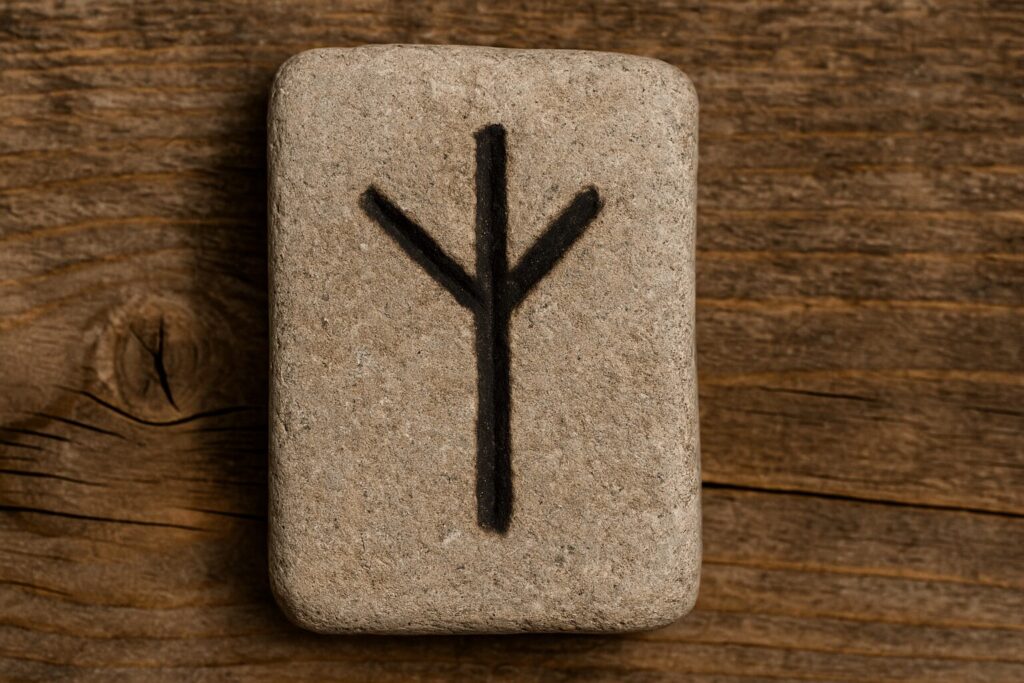
This routine is simple, realistic, and built for everyday schedules. It gives you daily contact with the protection rune without turning your week upside down.
Day 1 – Learn the line. Draw Algiz ten times, slowly and evenly. Say ‘guard’ as you draw. Meanwhile, write down three situations this week where you need that guard.
Day 2 – Route check. Add Raidho to the page. Write out your commute or travel plan. Your day now has a route with a built-in safety pause.
Day 3 – Principle. Practice Tiwaz. State one boundary for a meeting or negotiation. Additionally, prepare the exact sentence you’ll use if that boundary is tested.
Day 4 – Carry. Choose a pendant or pocket stone. Touch it before entering a crowded place. Then, exhale for six, scan the exits, and set a 30-minute check-in reminder.
Day 5 – Home. Use Algiz on a home checklist: test batteries, check locks, restock first aid. Consequently, the symbol marks a short, repeatable monthly routine.
Day 6 – Review. Read your notes and circle one win. Choose one improvement to apply in the coming week.
Day 7 – Bindrune light. Combine Algiz + Raidho on a card for the car or bike. Keep the lines simple. Then, state a three-step pre-departure ritual: lights, brakes, route. Therefore, the practice turns into muscle memory.
Repeat the cycle. By the second week, it feels smoother. By the third, it becomes normal.
Is Algiz the only Norse protection rune?
Algiz is the most direct protection rune. However, context may call for support from others. For example, when traveling, Raidho adds safety on the road.
When in need of ethical boundaries, Tiwaz steadies your hand. For resilience during recovery, Eihwaz holds firm. Therefore, Algiz remains the primary sign, while the others refine the situation.
Can I use a modern design?
Yes – as long as it stays legible. The protection rune symbol works best when the original lines are clear. Too much stylization blurs the form and weakens its power as a cue.
Does language matter?
Yes. Pronouncing the names strengthens memory. For instance, say the rune name as you draw: “Algiz, Tiwaz, Raidho.”
Meanwhile, write a short English phrase that links the symbol to action. Both sound and writing reinforce each other.
What about tattoos?
Tattoos carry lasting weight. Therefore, research the symbol, placement, and cultural context before committing.
Talk through your purpose with someone you trust so that the meaning matches the permanence.
Can I mix traditions?
You can, but it’s best to master one system first. Clarity comes before blending. Afterwards, you can add other symbols if they support the same goals of boundary and safety.
A protection rune is a compact way to focus your attention on safety, boundaries, and return.
History gives the foundation, but practice makes it real. When you draw Algiz, you’re saying, “I notice, I decide, and I act”.
If you pair it with Raidho, it becomes, “I protect the route”. If you add Tiwaz, it declares, “I keep my word under pressure”. In this way, the Norse protection rune turns into a living tool rather than a myth.
Keep the practice short. Draw the line, name the action, and review the result. Meanwhile, hold to simple materials and clear ethics.
Over time, you’ll notice the change: fewer rushed choices, calmer traveling, and stronger boundaries with people and in tough situations.
That’s the sign of a method that works. When someone asks about a Nordic rune for protection, you’ll have an answer you trust, a story from your own week, and even a practice card still riding in your wallet.
Think of protection as a step-by-step sequence.
First, notice the risk. Next, prepare your plan of action. Finally, hold your boundary when it counts. The rune shows the direction you should take, but your actions are what provide the shield.